

Iran has once again blocked civilian ships from passing through the Strait of Hormuz in response to the US attempt to impose its own blockade of the strait.
This was reported by Suspilne citing the Iranian news agency Fars.
According to an official statement by a spokesperson for Iran’s Central Command, as of now, the situation has returned to its original state and is under the strict management and control of the armed forces.
The Central Command cites the lifting of the US blockade of the Strait of Hormuz as one of the conditions for reopening it.
It is worth noting that the situation regarding the blockade of the Strait of Hormuz unfolded in several stages.
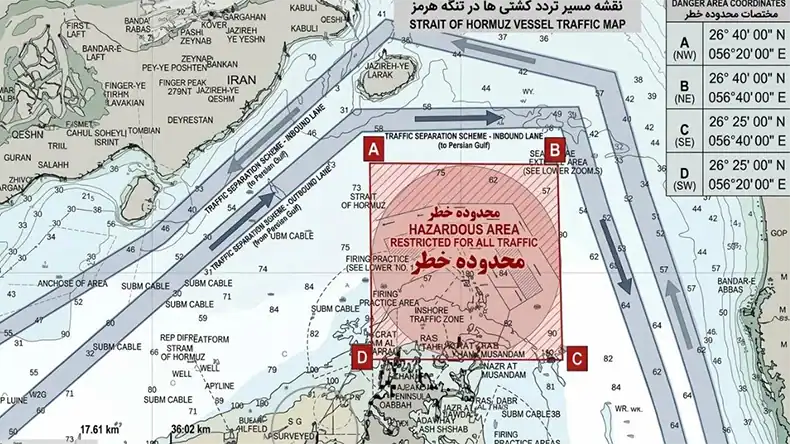
It was first opened on April 8, 2026, when Iranian Foreign Minister Abbas Araghchi announced that the strait was ‘fully open’ to all commercial vessels during the ceasefire in Lebanon (which began on April 16).
Passage was to be restricted exclusively to routes approved by the Iranian Ports and Maritime Organization. Currently, Tehran is unable to fully open the Strait of Hormuz to shipping because it cannot locate all the sea mines it laid itself.
This situation prevents Tehran from promptly fulfilling the Trump administration’s demand to increase the capacity of this strategic waterway, through which a significant portion of the world’s oil exports passes.
As early as April 12, Donald Trump ordered the US Navy to begin a full blockade of the Strait of Hormuz—one of the world’s key energy routes—and to detain ships that had paid transit fees to Iran.

As early as April 17, Iranian authorities announced that they had opened the Strait of Hormuz to all commercial vessels. The country’s Foreign Minister, Abbas Araghchi, said that ships departing from Gulf countries could follow a designated route announced by the Iranian Ports and Maritime Organization.
At the same time, the Ports Authority had previously urged crews of ships passing through the Strait of Hormuz to coordinate their movements with the IRGC due to the threat of anti-ship mines.


