
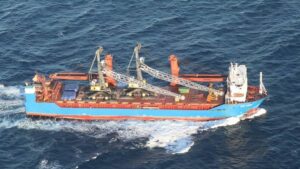
A possible attack using a Barracuda torpedo may have caused the sinking of the Russian cargo ship Ursa Major in the Mediterranean Sea on December 23, 2024.
This is according to a CNN investigation based on reports from Spanish maritime authorities, data from the national seismic network, and crew testimony.
A 50-by-50-cm hole was found in the ship’s hull 111 km off the coast of Spain, with bent metal edges indicating an external impact.
The bulk carrier was likely carrying two VM-4SG nuclear reactors for submarines destined for North Korea.
The ship began its voyage in early December from the port of Ust-Luga, declaring Vladivostok as its official destination. The use of a long maritime route instead of Russia’s railway network raised suspicions among Spanish investigators about the nature of the cargo.
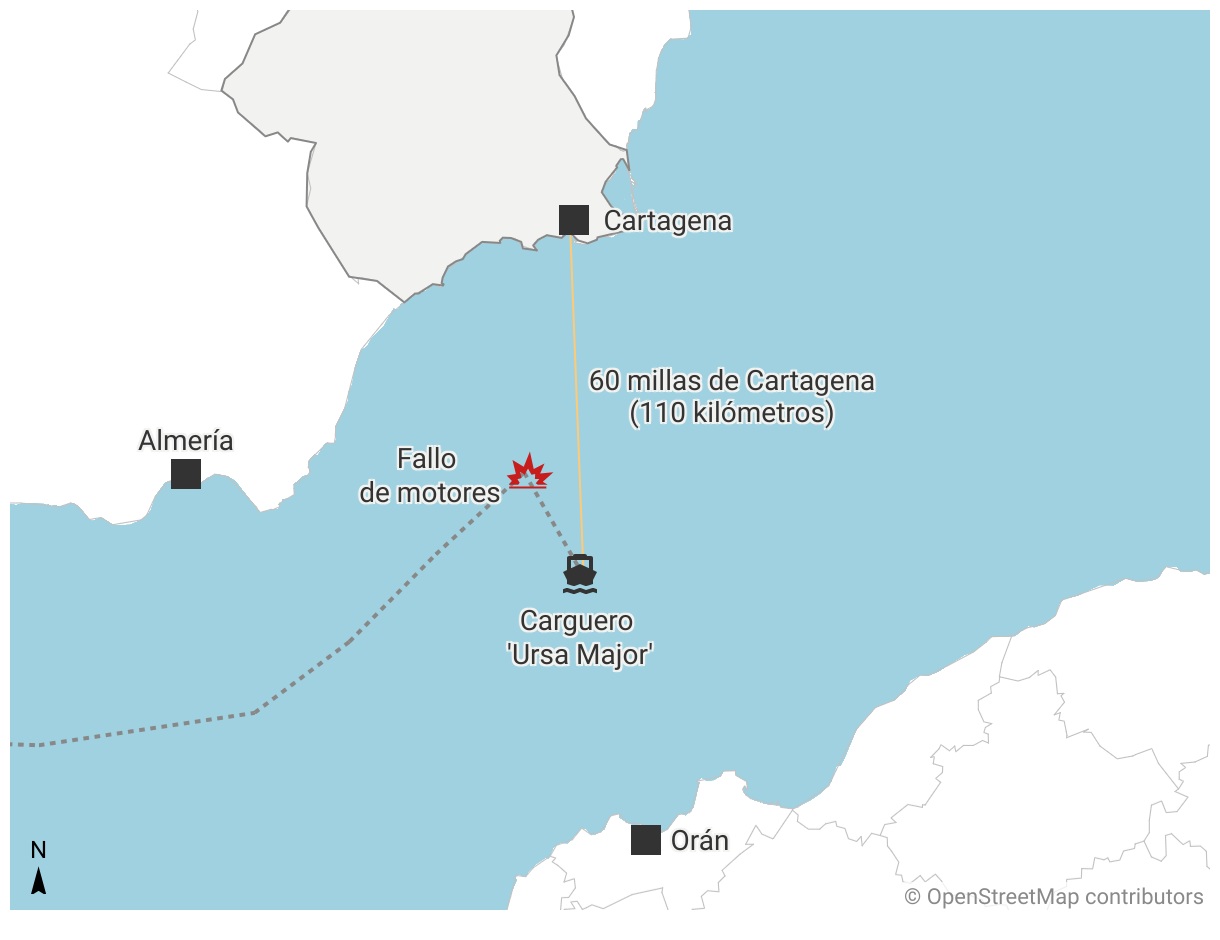
On December 22, the ship slowed in Spanish territorial waters, but the crew told rescuers no assistance was needed. The next day, three powerful explosions were heard on board in the engine room area, killing two mechanics.
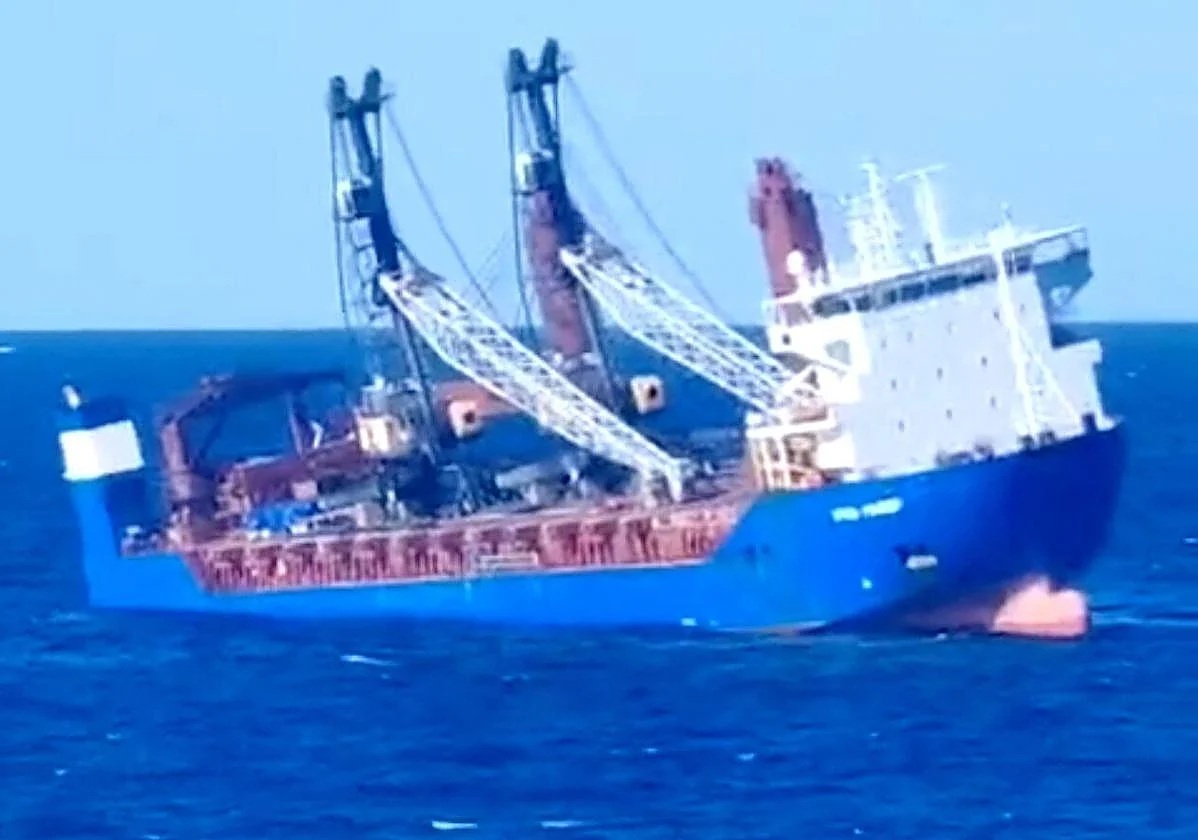
During the rescue operation, the Russian landing ship Ivan Gren, which was accompanying the vessel, ordered Spanish ships to keep their distance. After the evacuation of 14 sailors, Russian forces fired red flares, coinciding with four underwater explosions that sank the ship.
Captain Igor Anisimov said during questioning in the port of Cartagena that the vessel was transporting nuclear reactor components disguised as “manhole covers”. According to him, the cargo was to be delivered to the North Korean port of Rason, and the Liebherr cranes on board were intended to unload this equipment.
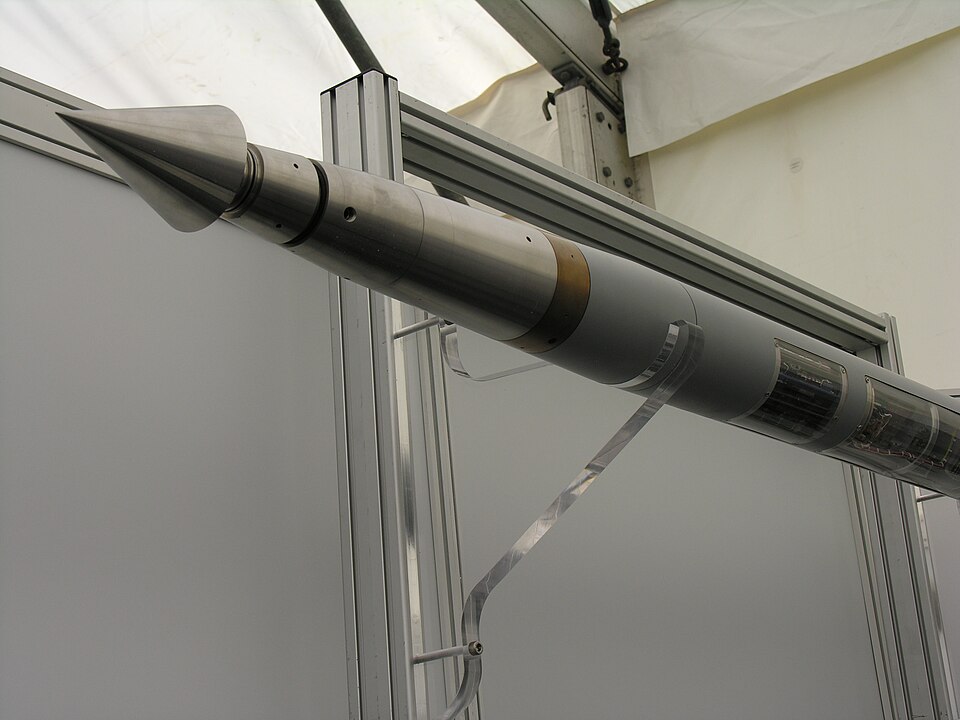
Experts from the Janes analytical center said the nature of the hull damage could also indicate the use of a shaped-charge mine. Such a device may have been attached to the ship in advance to disable it during transit through neutral waters.
A week after the incident, the Russian vessel Yantar, officially engaged in scientific research but associated with underwater reconnaissance, arrived at the site. Seismologists again recorded four explosions at depth while the Yantar was above the wreckage, which may indicate the destruction of the reactor remains on the seabed.
The United States also showed interest in the incident, sending a WC-135R Constant Phoenix radiation reconnaissance aircraft to the area. The aircraft monitored the waters in August 2025 and February 2026 to detect possible radioactive leaks from the sunken cargo.
Ursa Major lies at a depth of about 2,500 meters in the Mediterranean Sea. The Spanish government said it is impossible to recover the flight recorders due to technical difficulties and risks, while opposition lawmakers suspect authorities of concealing details of the operation.
