
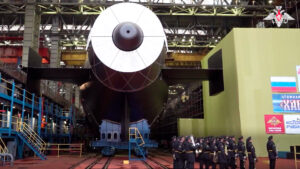
Russia’s newest top-secret Project 09851 submarine, Khabarovsk, combines features of the Borei and Belgorod classes.
This was reported by researcher H. I. Sutton for Naval News.
According to available assessments, the submarine integrates elements of both designs: effectively, the aft section of a Borei and the bow section of the Belgorod, the first submarine adapted to carry Poseidon vehicles.
Although both base designs are among the largest submarines in the world, Khabarovsk is somewhat shorter. This is due to the absence of a central section: Borei-class submarines house Bulava ballistic missile silos there, while Belgorod includes a dock for deep-sea submersibles.
At the same time, Khabarovsk remains a large submarine, with an estimated length of about 135 meters and a beam of about 13.5 meters. These dimensions were assessed in November 2025.
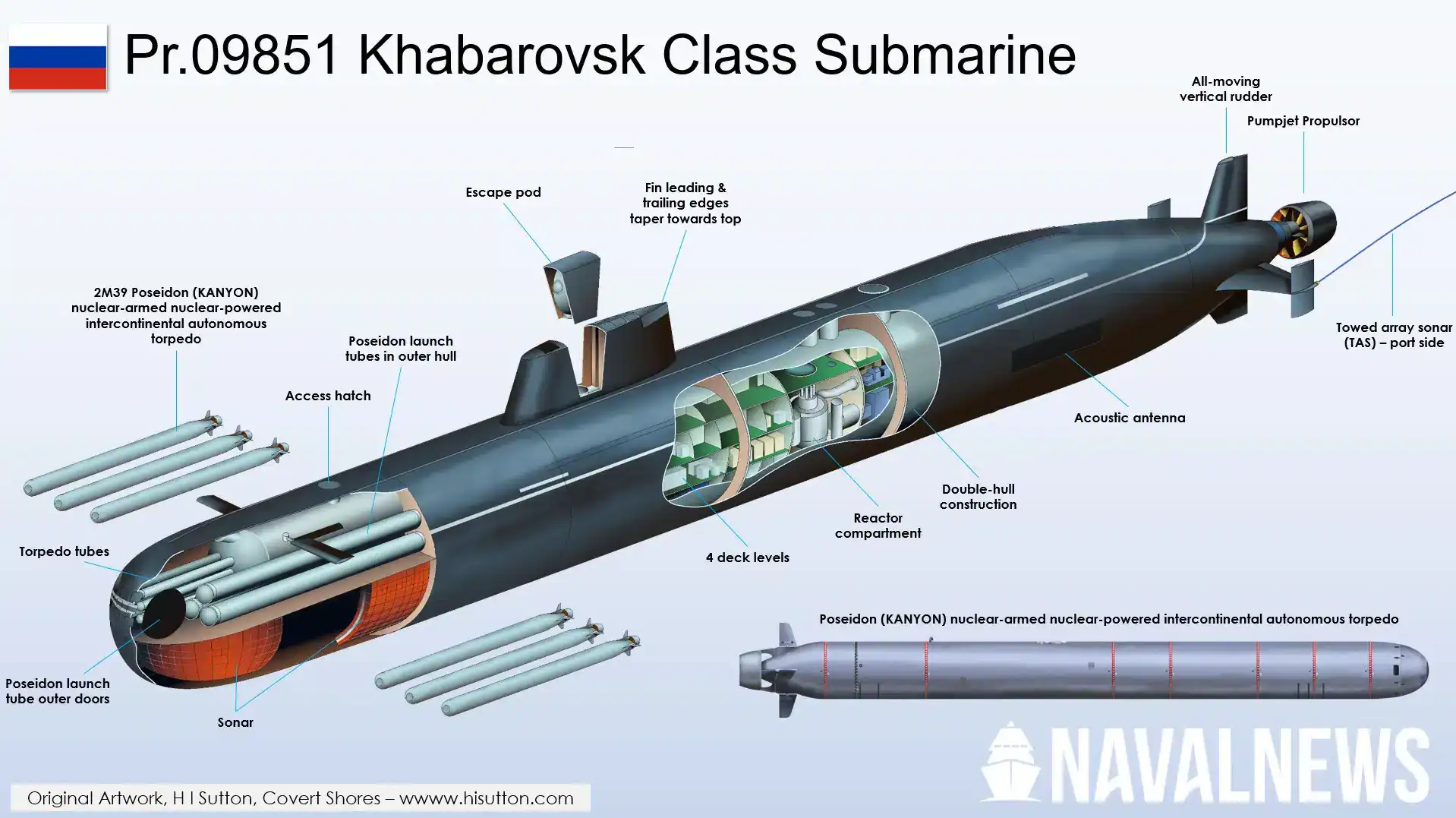
The bow section, which houses launch systems for Poseidon vehicles and standard torpedo tubes, is structurally similar to Belgorod.
It is likely capable of carrying up to six Poseidon systems, housed in two flooded hangars — one on each side. Launch and loading are conducted through large hatches in the bow that resemble oversized torpedo tubes. A compartment for conventional heavy torpedoes is located between them.
The presence of a torpedo compartment between the Poseidon hangars is supported by access hatches on the hull and is consistent with the Belgorod layout.
A similar configuration resembles Soviet cruise missile submarines of the Cold War. It is possible that Khabarovsk also uses a double-hull or two-section arrangement to increase internal volume within the constrained space between launch systems.
The exact number of torpedo tubes and the size of the ammunition load remain unknown. They are likely limited, as the design prioritizes Poseidon carriage. The submarine appears to be a specialized platform for this system.
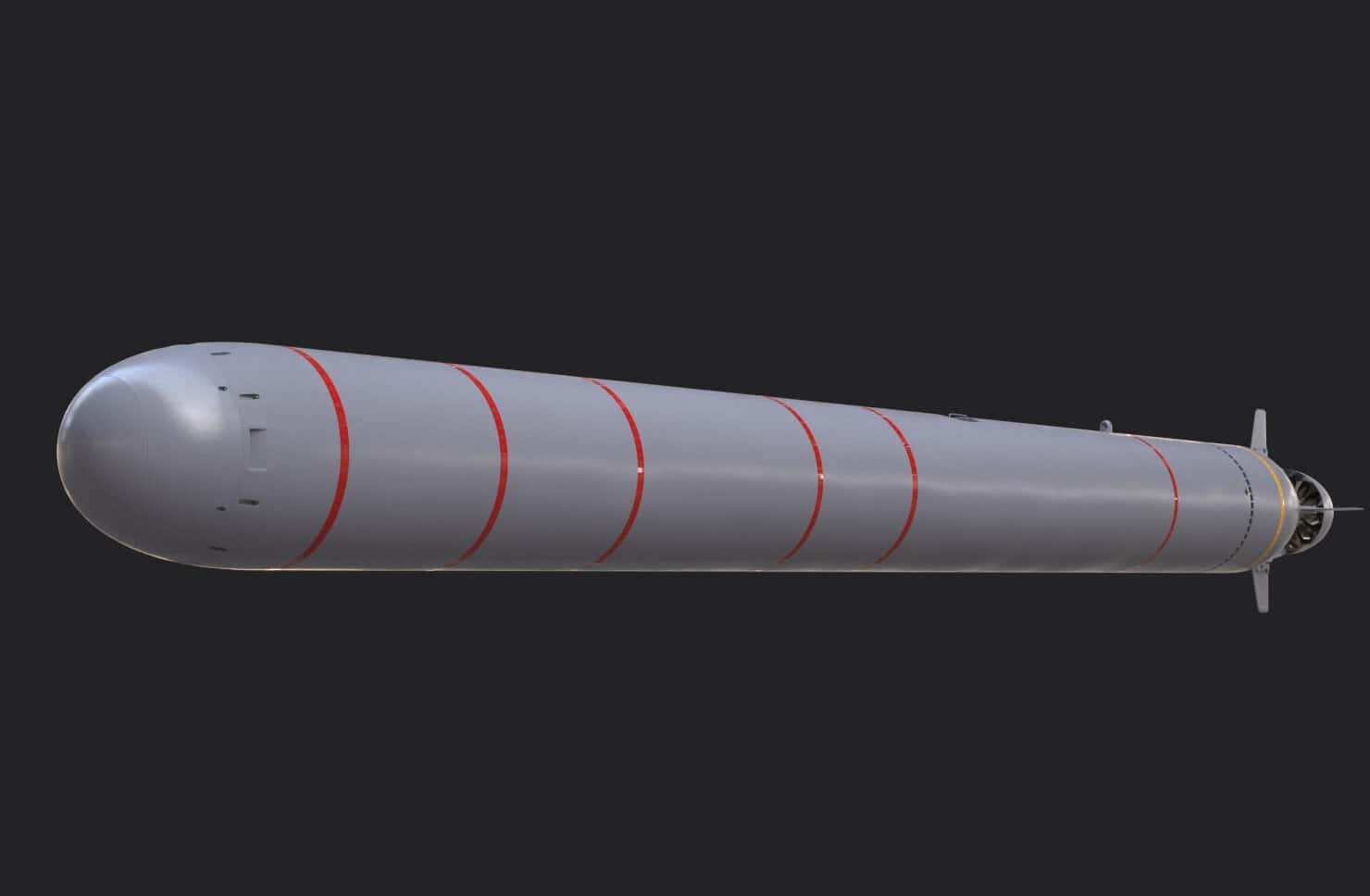
At the end of October 2025, Russia announced tests of the Poseidon nuclear-powered unmanned underwater vehicle, presented as a system capable of striking targets at virtually unlimited range.
According to Russian officials, the tests took place on October 28. After launch from a submarine, the prototype reportedly used its onboard nuclear power plant for the first time to travel along a designated underwater route. The system is said to be capable of carrying both conventional and nuclear payloads, with nuclear propulsion providing near-unlimited range.
The aft section of Khabarovsk, largely derived from the improved Borei-A variant, is likely equipped with an OK-650V nuclear reactor, providing a high level of stealth through reduced acoustic signature.
However, unlike Borei-class submarines, the escape capsule is located in the sail rather than in the aft hull. This configuration is more typical of Russian submarines, although the sail itself appears relatively compact for a vessel of this class.


