
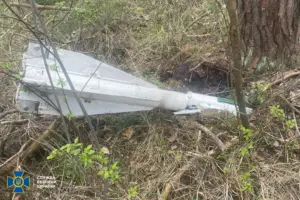
The Security Service of Ukraine (SSU) has detected elevated radiation levels in the wreckage of a Geran-2 drone shot down in the Chernihiv region on April 7 this year.
The SSU reported this on its website.
The agency reported that this was caused by the Russian use of an R-60 air-to-air missile mounted on the strike drone.
During radiation monitoring, a gamma radiation level of 12 μSv/h was recorded in the immediate vicinity of the wreckage of the drone and missile.
The SSU notes that this level significantly exceeds natural background radiation and poses a risk to human health.
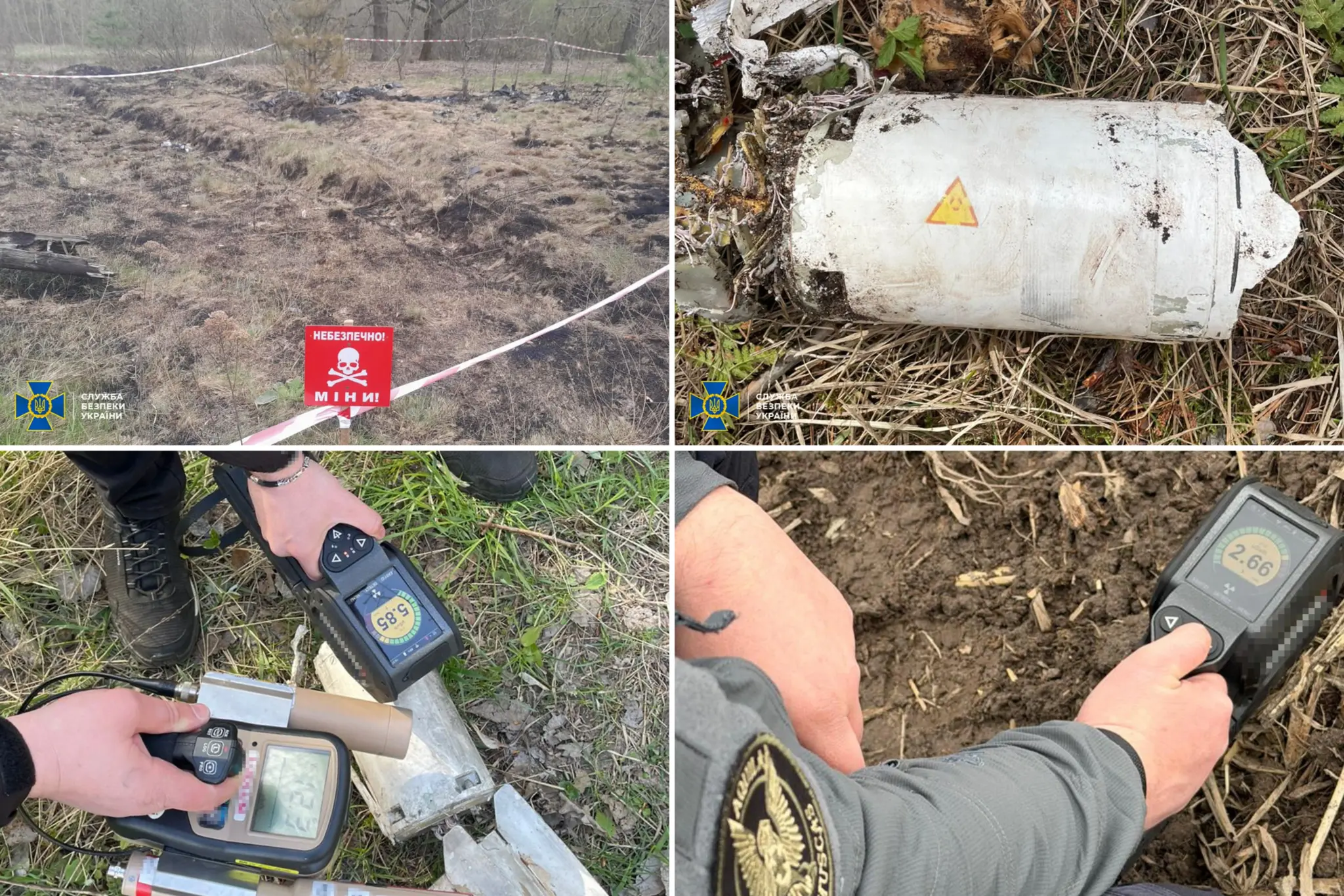
The R-60 missile warhead was later rendered safe and transported to a radioactive waste storage facility.
“According to the results of examinations, the Russian missile warhead contains elements of depleted uranium identified as Uranium-235 and Uranium-238,” the Security Service shared, noting that a pre-trial investigation is ongoing in criminal proceedings.
Geran-2 with R-60
Russian forces are installing R-60 short-range air-to-air missiles on Geran-2 drones in an attempt to target Ukrainian aircraft and helicopters used to intercept them.
The R-60 missile is mounted on the upper section of the drone airframe. According to Ukraine’s Defense Intelligence, it is launched using a standard APU-60-1MD aircraft launcher adapted for unmanned use.
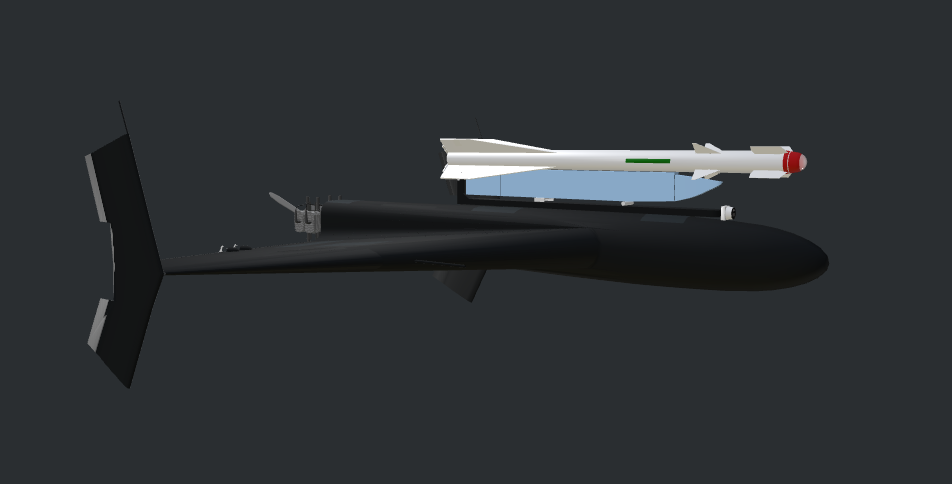
The drone is equipped with two cameras: one mounted in the nose and another behind the missile launcher.

Video transmission and control commands are carried out via a mesh modem. If a Ukrainian aircraft or helicopter is detected, the operator issues a launch command remotely.
Warhead of the R-60 missile
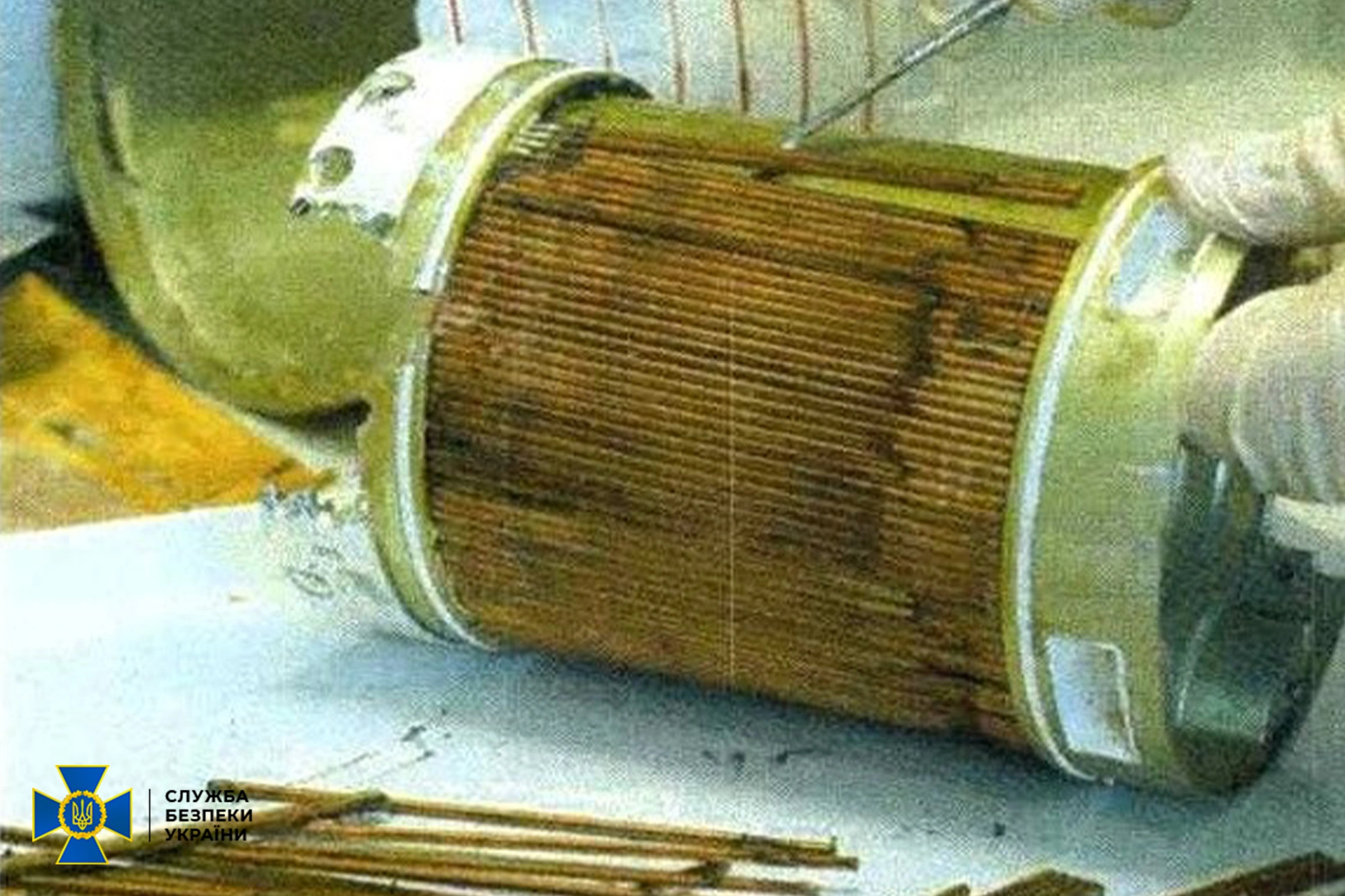
The warhead of the Soviet R-60 air-to-air missile originally used tungsten alloy fragmentation elements. However, the R-60M version introduced rod-type elements made of depleted uranium. The change of material reportedly followed the USSR-China conflict, when tungsten supplies were disrupted.


