
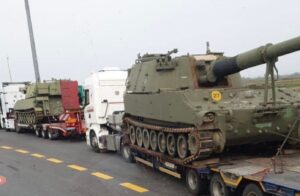
Ukraine has become one of the key customers for Italian arms exports, according to a new government report.
In 2025, Kyiv rose to 4th place among importers of Italian military equipment—up from outside the top ten a year earlier—with exports totaling €349 million, Breaking Defense reports.
The report ranks Ukraine fourth behind Kuwait, Germany, and the United States.
Kuwait’s rapid rise to first place—from 76th last year—is attributed to three major defense contracts totaling approximately €2.6 billion.
Although the report does not disclose the exact types of exported weapons, it limits itself to categories such as bombs, torpedoes, missiles or missile systems, electronic equipment, software, ground vehicles, and manufacturing technologies.
The strengthening of ties between Kyiv and Rome became evident last week when Ukrainian President Volodymyr Zelenskyy visited Rome and met with Italian Prime Minister Giorgia Meloni to discuss enhancing security cooperation.
A statement from the Ukrainian Ministry of Defense noted that the talks focused on a drone agreement.
“We propose combining our military expertise in drones, missiles, electronic warfare, and other areas with our partners’ capabilities. Italy has expressed interest in this format, and Giorgia and I agreed that our teams will work out the details of a drone agreement between our countries,” the Ministry of Defense quoted Zelensky as saying.
In particular, Rome is reportedly interested in establishing a joint production program for unmanned aerial vehicles.

Meloni agreed, stating that Italy is “very interested in developing joint production, especially in the field of drones. We are well aware that Ukraine has become one of the leading countries in this sector in recent years.”
Since 2022, Italy has provided Ukraine with about a dozen military aid packages, including, together with France, the SAMP/T air defense system.
According to the latest report from Italian intelligence agencies, Italy has provided approximately €2.8 billion in direct aid to Ukraine, as well as an additional €11.5 billion in EU-level funding.


