

The United States Army has named the newest MV-75 multi-purpose tiltrotor aircraft the Cheyenne II, in honor of one of the Native American tribes.
This was reported by the manufacturer, Bell.
In keeping with the US Army’s tradition of honoring Native American peoples, the name MV-75 references the heritage of the Cheyenne — two federally recognized communities: the Northern Cheyenne in Montana and the United Cheyenne and Arapaho Tribes in Oklahoma.
The number “75” in the designation also has symbolic significance — it reflects the year the US Army was founded, 1775.
It is reported that Bell and the US Army are on schedule and preparing to deliver the first test aircraft.
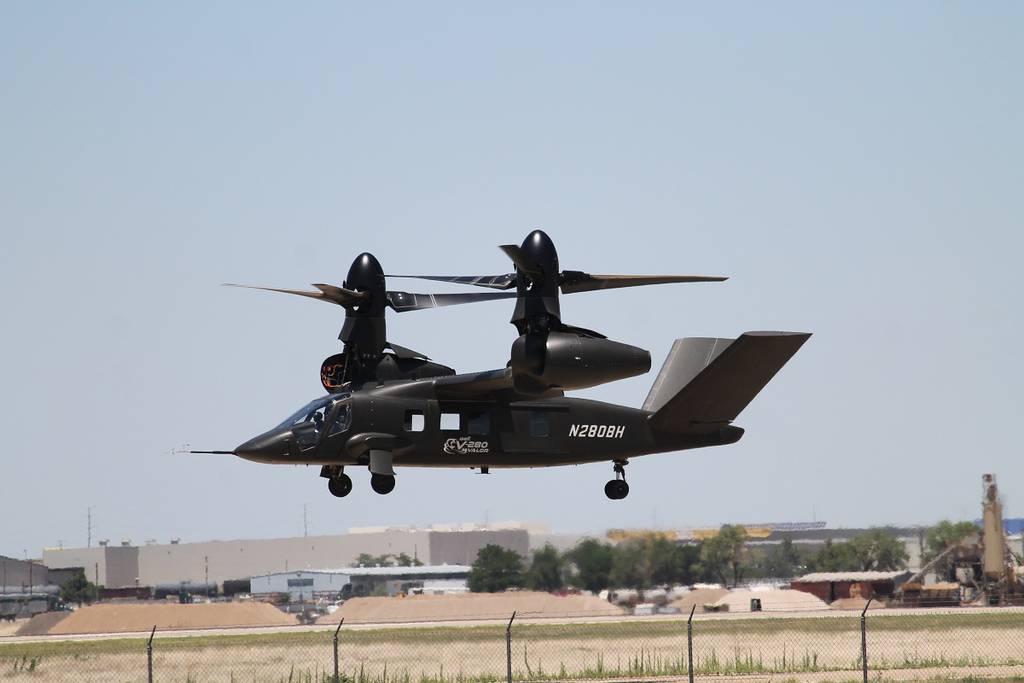
MV-75
The MV-75 is a new-generation American convertiplane developed by Bell Textron as part of the Future Long-Range Assault Aircraft (FLRAA) program, designed to replace multi-role helicopters such as the UH-60 Black Hawk.
Structurally, the platform is based on V-280 Valor technologies. Unlike the older V-22 Osprey, only the rotors rotate in this aircraft, rather than the entire engine, which simplifies the design, reduces weight, and increases reliability.
Initially, the MV-75 was expected to enter service in 2030, but the timeline has recently been revised — deployment is now expected to begin as early as 2028.
Although the MV-75 is being developed as a replacement for the UH-60 Black Hawk, the US Army currently views it as a complement to its existing fleet.
It is planned that both platforms will be operated in parallel for several decades.
Specifications:
- Cruising speed: ~520 km/h
- Maximum speed: over 560 km/h
- Combat radius: approximately 800–1,500 km (depending on the mission)
- Range: over 3,800 km
- Crew: 4
- Troop capacity: up to 14 soldiers


