
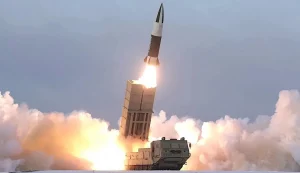
Military engineers and scientists from the Ministry of Defense of Ukraine carried out laboratory analyses of debris from North Korean missiles, assessing how ‘unique’ they are compared to Russian designs.
The ministry’s press service reported this.
An examination of fragments from a missile that hit Kharkiv on January 2, 2024, confirmed several characteristics matching schematics published in South Korean scientific journals.
North Korean missiles are distinguished by their specific geometry. In particular, the diameter of the KN-23 measures 110 cm at the tail section and narrows to 90 cm at the front. The 110 cm measurement is not found in any other country in the world except North Korea. The diameter of the KN-24 is about 100 cm.
Experts also compared the debris with photographs from missile manufacturing facilities and identified seven key similarities – ranging from the number of bolt holes used to secure the nozzle to the distinctive compartments for satellite navigation receivers.
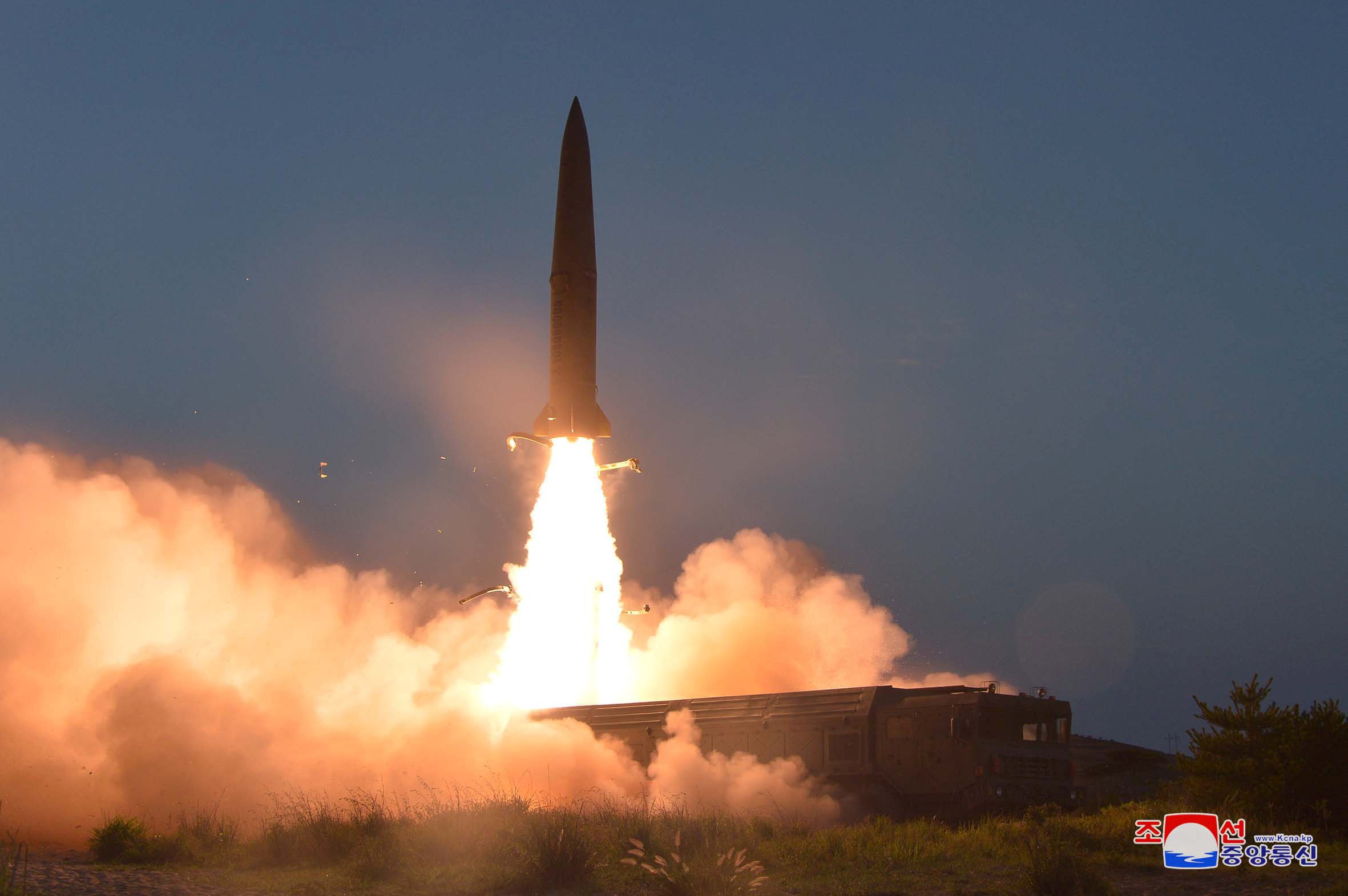
The Ministry of Defence of Ukraine concluded that the KN-23 and KN-24 missiles are not direct copies of Soviet or Russian models and were not produced ‘under license’ from the Iskander 9M723 ballistic missile.
Meanwhile, there are indications that North Korea refined one of the early development variants related to the Iskander system.
Missiles from North Korea use less energy-efficient propellants, and their engines are roughly one and a half times larger and longer than Russian counterparts, enabling them to achieve comparable range.
Outdated manufacturing technologies are employed: the quality of soldering corresponds to a level typical of approximately half a century ago.
Control units were found to contain commercially available components from leading global brands, likely supplied in circumvention of sanctions.
To ensure thermal resistance during atmospheric flight, in addition to the thermal protection coating of the warhead, a graphite-based nose cone (radome) is used. This is a relatively low-cost solution, likely featuring limited access to more advanced thermal protection technologies.
All such studies conducted by military engineers and scientists of the Ministry of Defence form part of forensic examinations carried out by the relevant authorities.
The findings form part of the evidentiary base in war crimes cases and influence the further development of sanctions policy.

