
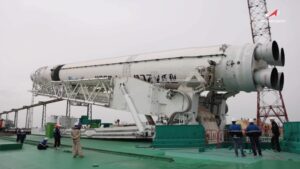
The Russians launched the Soyuz-5 carrier rocket from the Baikonur Cosmodrome for the first time. The carrier rocket is capable of placing 17 tons of cargo into orbit.
The first launch was conducted along a suborbital trajectory, according to Roscosmos.
On board was a scale model, which allowed for testing the main flight parameters and system performance.
The launch took place from Launch Site No. 45 at the Baikonur Cosmodrome. This launch marked Russia’s ninth space launch in 2026.
By comparison, only 17 launches were conducted throughout the entire previous year.
In April, Russia launched the Angara-1.2 carrier rocket with an unknown payload.
The Launch Site No. 45 had not been used for nine years, as it was only suitable for Zenit rockets.
Some of their components were manufactured in Ukraine, and after supplies ceased, operation became impossible.
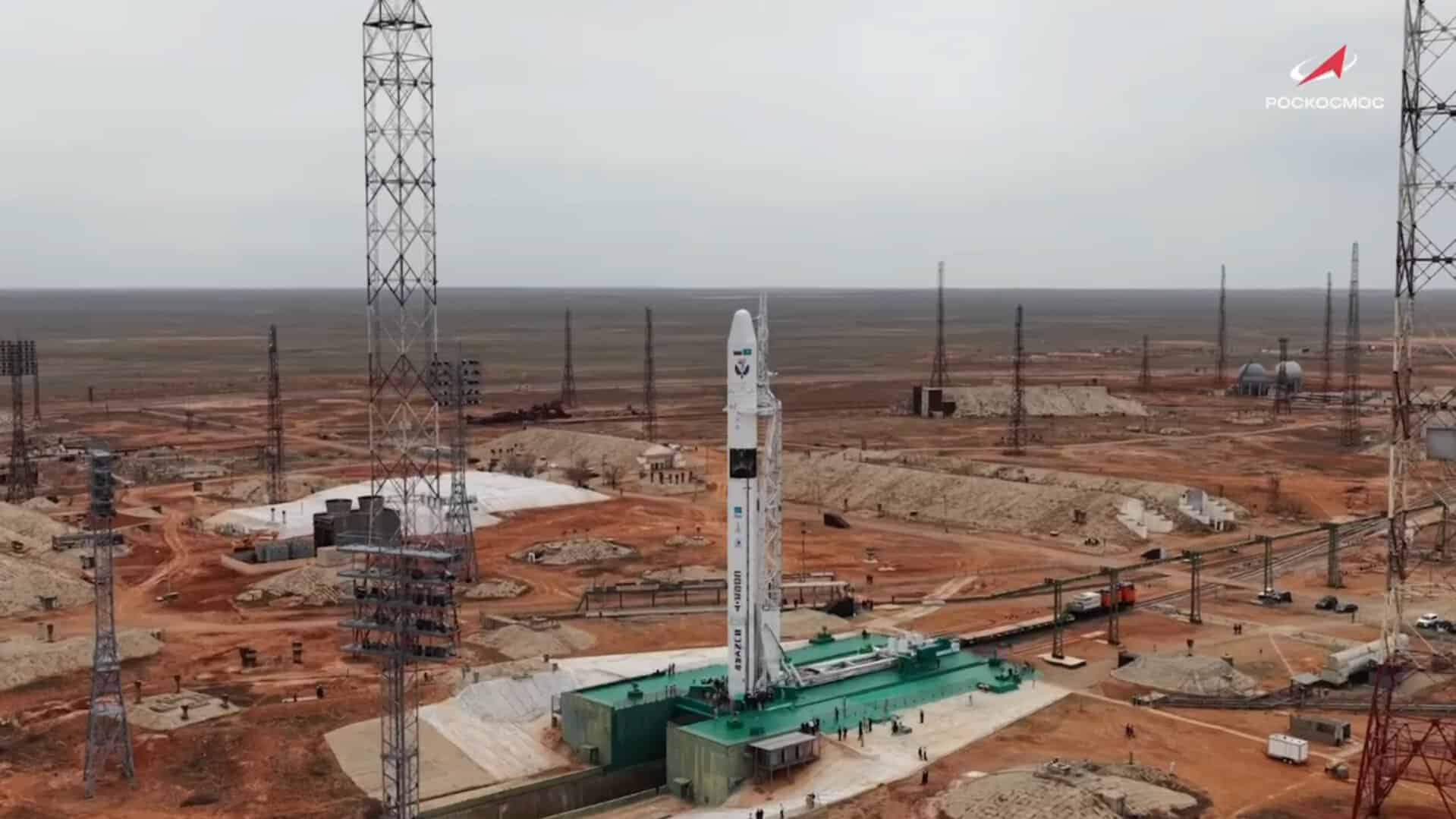
Soyuz-5 rocket
The development of the Soyuz-5 carrier rocket made it possible to resume use of this launch complex. This expands the spaceport’s infrastructure capabilities.
During the first test flight, both stages of the rocket operated normally. The payload mockup followed the calculated trajectory.
Nine and a half minutes after launch, it reached the designated point and splashed down in the Pacific Ocean as planned.
The rocket is designed to launch unmanned spacecraft. The launch vehicle was developed by the Samara-based company Progress. The rocket stands 65.2 meters tall, has a diameter of 4.1 meters and a launch mass of up to 531 tons.

The Soyuz-5 features a two-stage tandem configuration, which differs from the stacked design of other rockets in the Soyuz family. This allows for a reduction in dry mass and increased efficiency.
The first stage is equipped with an RD-171MV engine—one of the most powerful in the world. Kerosene and liquid oxygen are used as fuel, and the Fregat-SSU upper stage is used to reach higher orbits.

