

During the ORION 2026 military exercises, ICEYE demonstrated the capabilities of space-based reconnaissance for detecting hidden objects in real time. The released footage shows the operation of a mobile reconnaissance cell integrated directly into the brigades’ combat formations.
This was reported by the press service of ICEYE following the company’s participation in the exercises.
The ISR Cell was deployed to provide direct support to a French infantry brigade during the conduct of ground operations.
Radio & Nukes drew attention to an image of an air defense position area in Belarus. According to the report, the SAR satellite captured a base of S-300 anti-aircraft missile systems, revealing the facility’s detailed structure.
The image shows two 5P85 self-propelled launchers located in specially prepared caponiers.
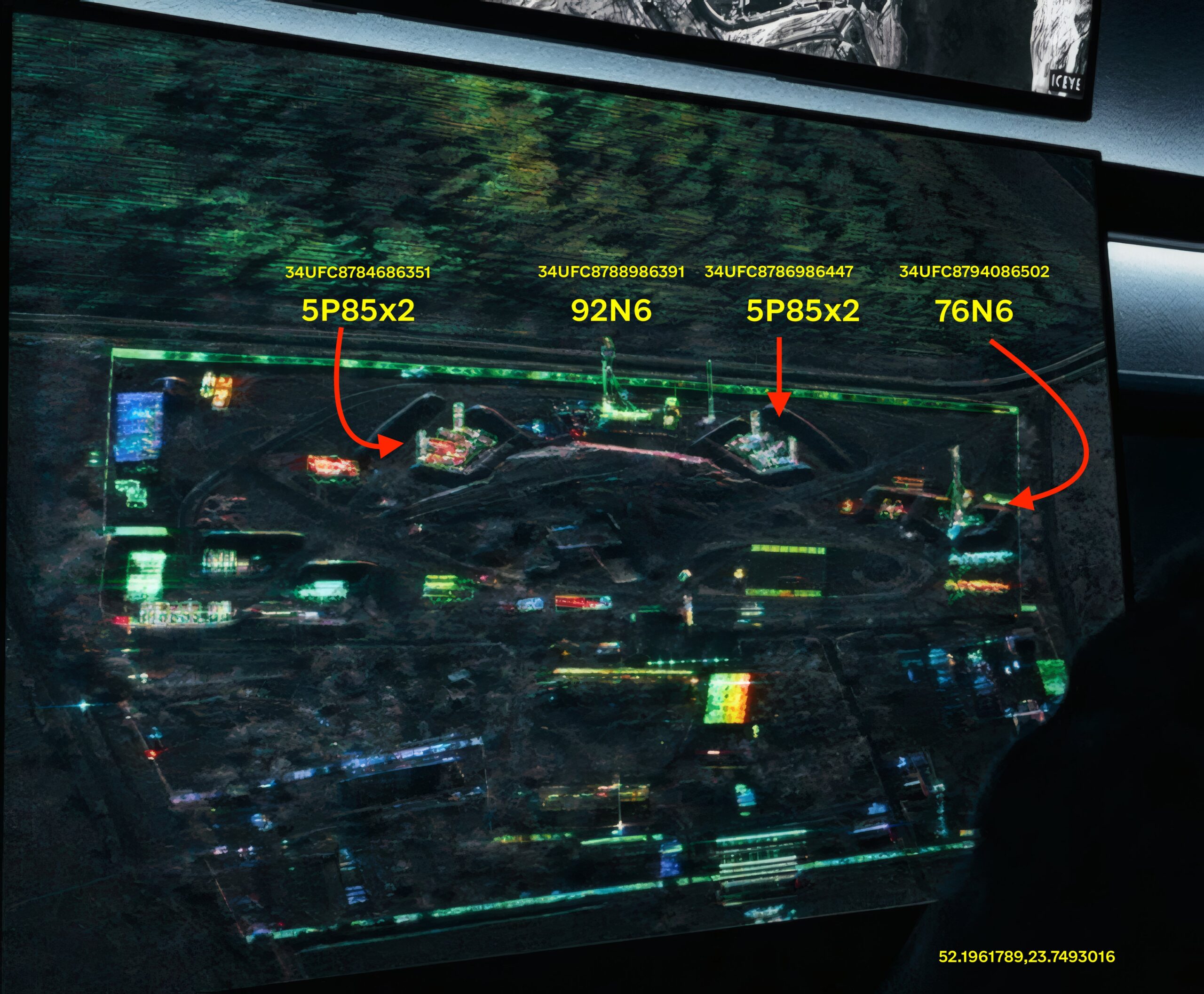
The system also detected a 92N6 radar station, which is responsible for guiding the system’s missiles. Next to it, a 76N6 radar was detected, designed to search for targets at extremely low altitudes.
The object was detected at coordinates 52.1961789, 23.7493016 near the city of Brest.

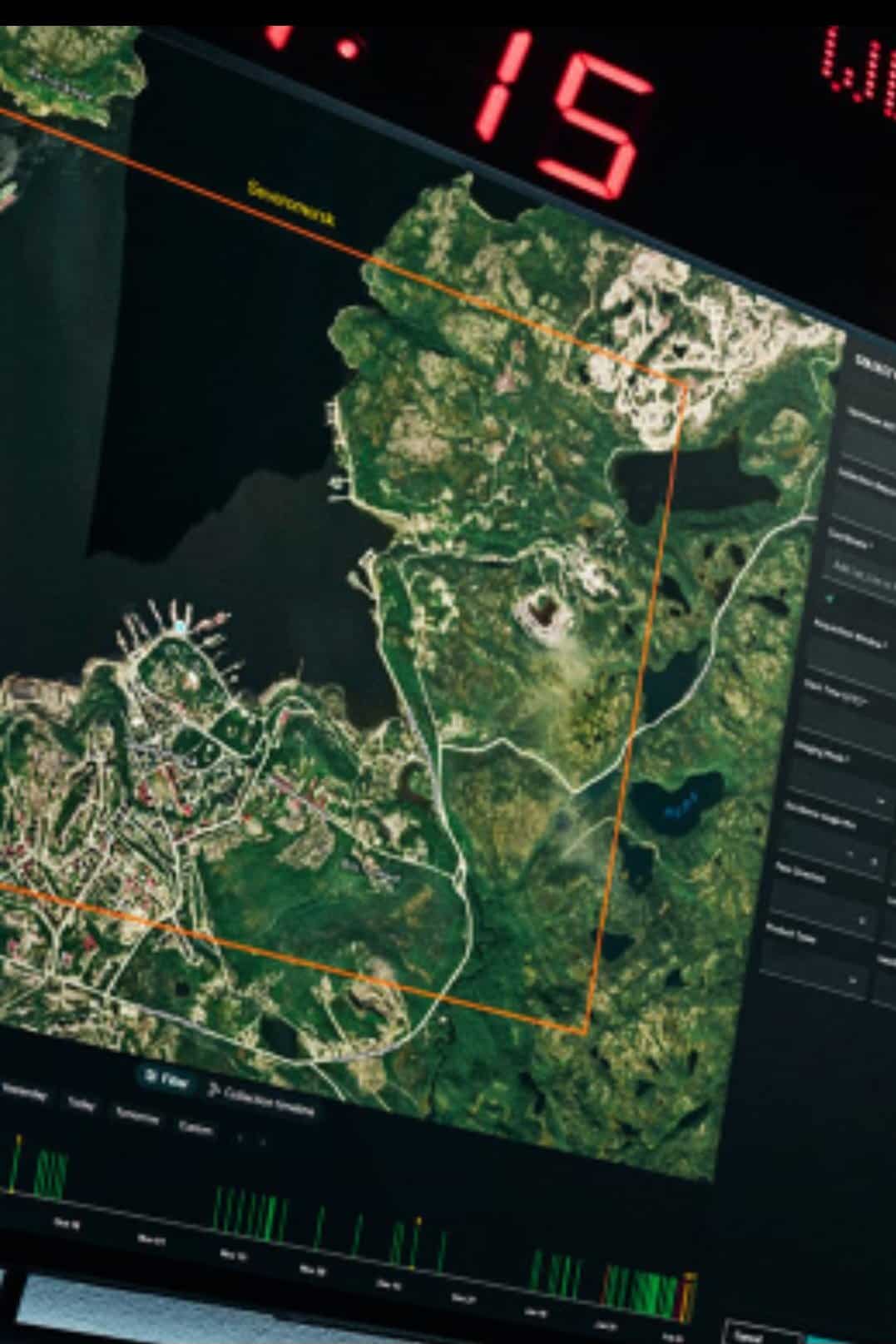
The X news account Status-6 spotted surveillance footage of Severomorsk, one of the main bases of the Russian Northern Fleet, on another monitor in the command center.
The ORION 2026 exercises were conducted under the leadership of coalition forces with the aim of preparing military personnel to wage war against a technologically equal adversary. The phase of the maneuvers combined ground, air, cyber, and space capabilities within a single operational environment.
ICEYE’s satellites use SAR (Synthetic Aperture Radar) technology. Unlike traditional optical satellites, which take “photographs,” SAR works like a sonar: it emits microwave pulses and records their reflection from the Earth’s surface.
SAR is highly sensitive to metals and the geometry of objects. Metal objects appear as very bright “neon” dots in the images because metal perfectly reflects radio waves.
This makes it easy to locate equipment even among trees or under camouflage nets that allow radio signals to pass through.


