
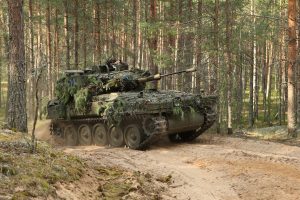
The Latvian government has approved a proposal from the Ministry of Defense to transfer additional CVR(T) series tracked reconnaissance vehicles to Ukraine.
This was reported by the Latvian Ministry of Defense.
Defense Minister Andris Spruds noted that, taking into account the current needs of the Ukrainian Armed Forces, the country will transfer additional CVR(T) combat reconnaissance vehicles, emphasizing Riga’s readiness to continue supporting Ukraine in countering Russian aggression for as long as necessary.
The ministry emphasized that the transfer of this equipment will not affect the combat readiness and operational capabilities of the Latvian National Armed Forces. At the same time, the exact number of vehicles planned for transfer has not been disclosed.
Earlier, at the end of March, it was reported that the delivery of the first batch of armored vehicles of this type had begun.
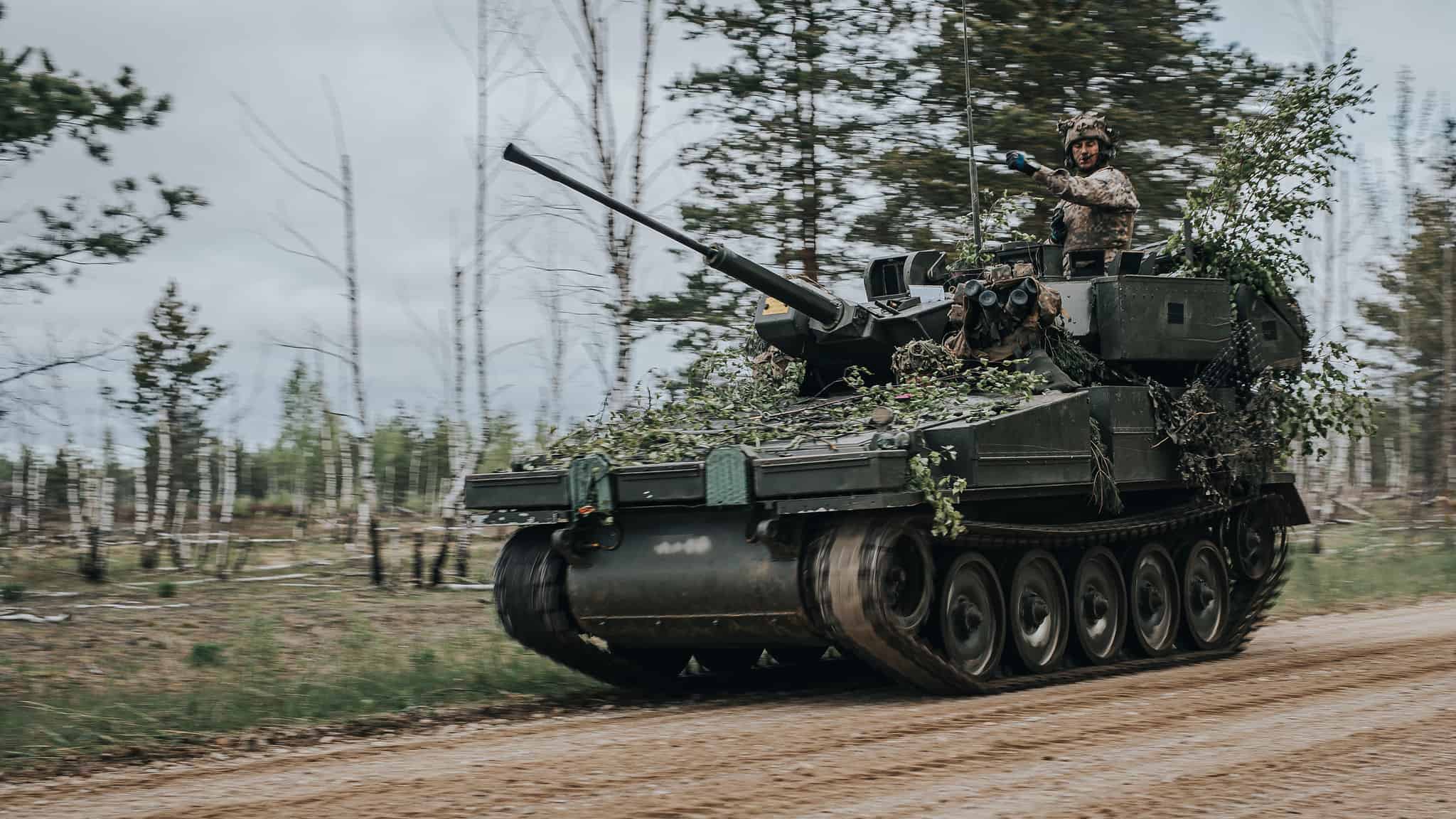
Overall, this is not the first transfer of CVR(T) vehicles by Latvia. In September 2024, a military aid package worth 40 million euros was announced, which included the first nine vehicles.
Last year, Latvia additionally transferred another 12 reconnaissance armored vehicles as part of the same package.
According to available information, the Latvian Army had a total of 205 vehicles of the CVR(T) series in service in 2020, including:
- Scimitar (FV107) — a reconnaissance vehicle equipped with a 30-mm RARDEN automatic cannon.
- Sultan (FV105) — a command and staff vehicle.
- Spartan (FV103) — a light armored personnel carrier.
- Samson (FV106) — an armored recovery and evacuation vehicle.
- Samaritan (FV104) — an armored medical evacuation vehicle.
Armored vehicles of the CVR(T) series
CVR(T) — a series of armored tracked vehicles based on a universal platform, developed by the British company Alvis in the 1960s for the British Armed Forces. The developers created these vehicles as tracked counterparts to the wheeled CVR(W).
With standard dimensions of 4.79 meters in length, 2.23 meters in width, and 2.1 meters in height, the vehicle had a standard weight of 8 tons, although depending on the variant, it weighed more; however, this allowed them to be actively used as light air-transportable vehicles.
In total, the CVR(T) series comprised 9 base models for various tasks and purposes, and the total number of vehicles produced reached approximately 4,000 units.


