
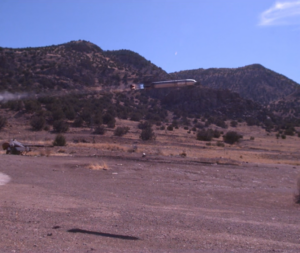
Tiberius Aerospace successfully conducted live-fire tests of the Sceptre long-range projectile, equipped with a liquid-fuel direct-flow air-breathing jet engine.
This was reported by Tiberius Aerospace.
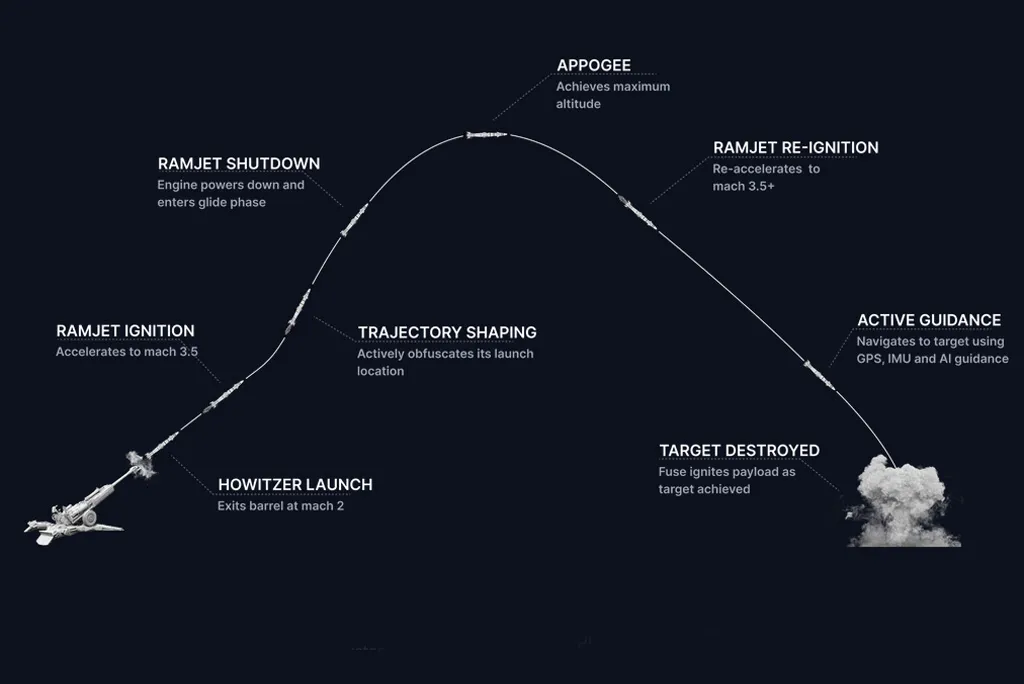
During tests in New Mexico, the company demonstrated that the latest munition reaches normal operating mode after being launched from a standard 155-mm NATO howitzer.
A critical milestone of these tests was the successful ignition of the liquid-fuel direct-flow engine following a launch overload of approximately 18,000 g, as well as the confirmation of stable flight dynamics, controlled rotation, and effective deployment of in-flight stabilization systems.
“This is a true global breakthrough. These tests validate not only the technology but also a new way to deliver capabilities quickly, at scale, and at a significantly lower cost. After successfully validating our design and engineering approaches, we now need to move to much larger test sites to conduct the next phase of testing, validation, and certification. Sceptre is an ambitious and complex project, but these successful test-firing results in the U.S. prove that we are moving quickly in the right direction,” said Chad Steelberg, founder and CEO of Tiberius Aerospace.
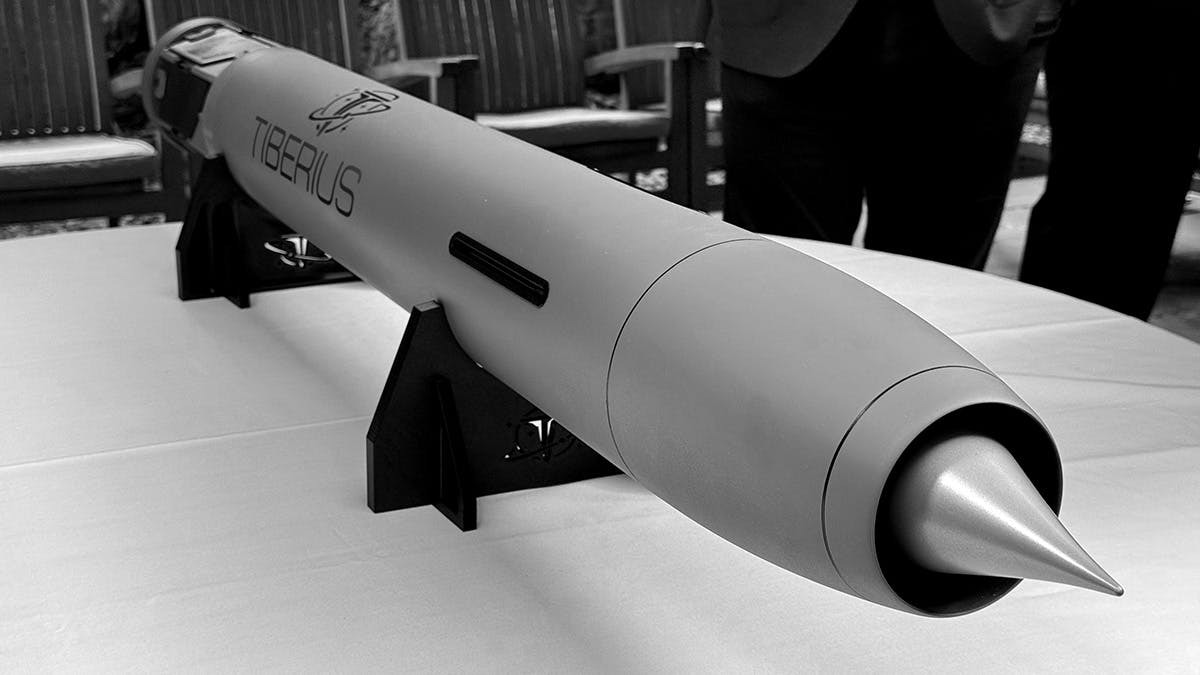
Sceptre
The manufacturer describes Sceptre as a “revolutionary” munition capable of reaching speeds of up to Mach 3.5, altitudes exceeding 20 kilometers — beyond the typical range of electronic countermeasures — and a range of up to 150 km.
A distinctive feature of the projectile is that it uses a liquid-fueled ramjet engine capable of operating on several types of kerosene and JP-4 and JP-8 jet fuel, unlike its counterparts, which use solid fuel.
The company claims a circular error probability of less than 5 m even in GPS-jammed conditions, which is to be ensured by a hybrid GNSS/INS guidance system with artificial intelligence.
The warhead is equipped with 5.2 kilograms of explosives. Additionally, a ballistic tungsten nose cone can be installed in place of the standard nose fairing to increase armor penetration.
The company states that the price per projectile when purchasing a batch of 1,000 units will be approximately $52,000, excluding the cost of the warhead, fuel, and fuze. Under mass production conditions, the price could be reduced to $42,000. At the same time, the company is considering the possibility of granting manufacturing licenses for exports to allied nations.
The development is funded by the UK Ministry of Defence, which signed a contract with Tiberius Aerospace to accelerate the creation of the Sceptre by September 2025.
Verification and validation efforts are supported by the US Department of Defense’s Defence Innovation Unit, which aims to accelerate the adoption of advanced commercial technologies by the armed forces.


