
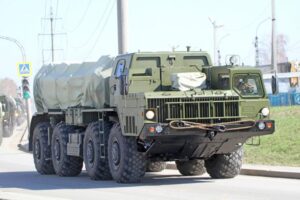
Ukrainian defense forces struck another Russian 9K515 Tornado-S multiple launch rocket system using a middle-strike drone near Melitopol.
This was reported by the General Staff.
The strikes were carried out on the night of April 27 and over the following 24 hours. In addition to the Tornado-S, an enemy ammunition depot and command-and-observation post in the Selidovo area of Donetsk region, as well as UAV control centers in the Malynivka area of Donetsk Oblast and the Huliaipole area of Zaporizhzhia region, were hit.
Additionally, the invaders’ repair unit was struck in the Mykolaivka area of Zaporizhzhia region.
This is already the second instance of a Tornado-S being destroyed in a short period of time in the same area. Earlier, it was reported that a similar combat vehicle was destroyed by pilots of the 422nd Unmanned Systems Regiment of the LUFTWAFFE, 17th Army Corps.
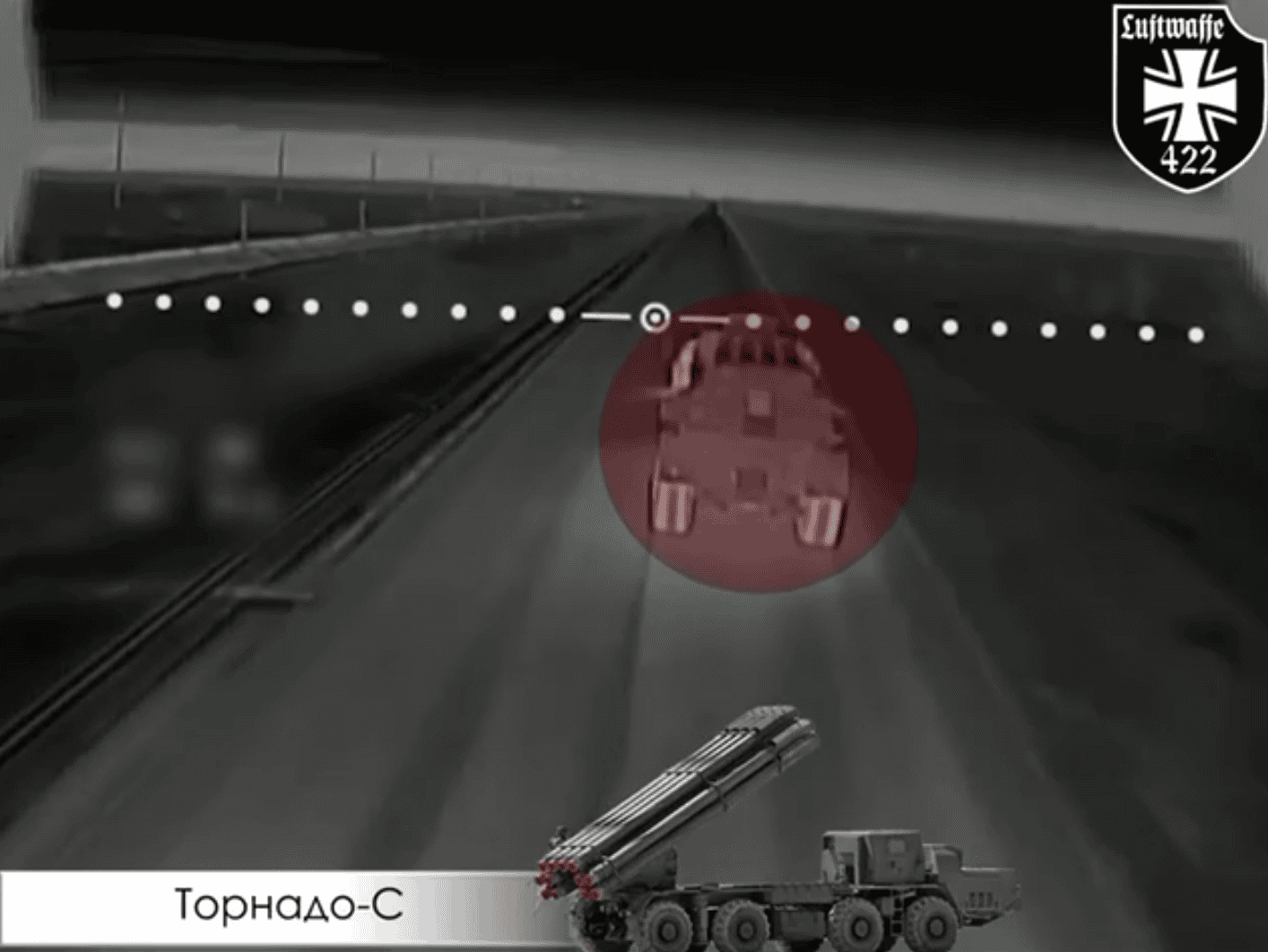
According to OSINT analyst imi, the system was detected using a drone on the E58 highway between the villages of Chekhorad and Udachne near Melitopol.
The released footage shows the drone capturing a column of vehicles, after which it flew over an escort vehicle and two trucks of a mobile fire group equipped with ZU-23-2 anti-aircraft guns. The final strike hit a deployed combat vehicle that was either preparing to fire or had just fired a salvo. Judging by the distinctive interface, the strike was carried out using a domestic FP-2 drone.
Tornado-S
Tornado is a family of 122-mm and 300-mm rocket munitions designed for the modernized BM-21 Grad and 9A52 Smerch systems. State testing of these rockets took place between 2012 and 2015.
Development and production are handled by the Russian state-owned enterprise NPO SPLAV, which is part of Rostec. Its research and production facilities are located in Tula.
A key feature of the family is the integration of a computerized ballistic calculator and the GLONASS satellite navigation system into the launchers. To receive the signal, the combat vehicles are equipped with ground-based satellite navigation system receivers.
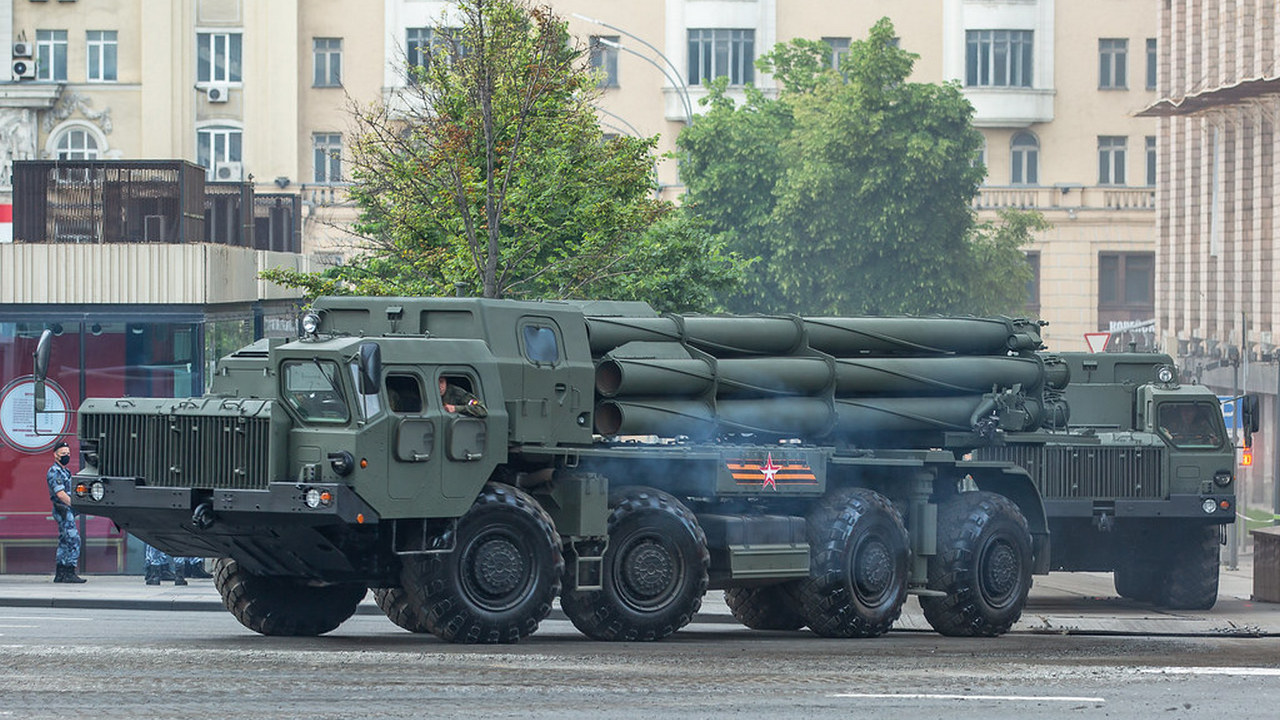
The upgraded systems are capable of automatically receiving and transmitting information via secure communication channels, performing georeferencing, navigation, and terrain orientation with data displayed on an electronic map.
The launcher can be guided in automatic mode without the crew leaving the cabin, while manual control remains an option.
There are two main variants: the 9K51M Tornado-G (for the BM-21 Grad) and the 9K515 Tornado-S (for the 9A52 Smerch). Thanks to a high level of automation, the crew size has been reduced to three people.
Read more about the Tornado-S in the article: Tornado-S: Dangerous Counterpart to HIMARS and Vilkha MRL.


