#Kanal13 #likekanal13 #subscribekanal13 #warinukraine
https://www.youtube.com/user/kanal13az?sub_confirmation=1 – SUBSCRIBE TO US!
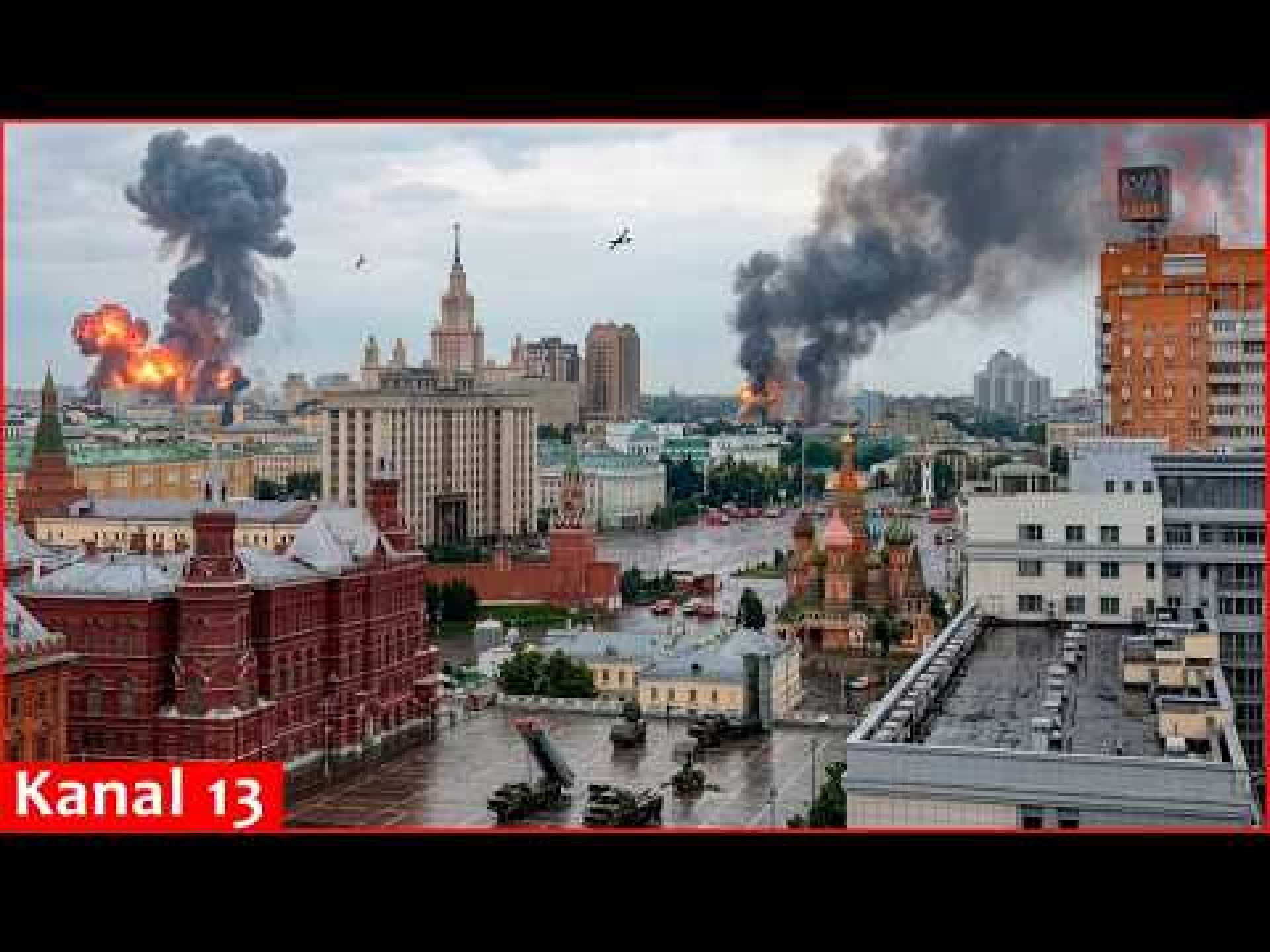
OSINT analysts at DroneBomber+ reported that during the massive attack on Moscow, Ukrainian drones penetrated all four echelons of Moscow’s air defenses. This is one of Russia’s most heavily defended areas: air defense systems are concentrated around the capital, and, according to analysts, the region’s defenses were further strengthened before the May 9 parade. According to their assessment, confirmed hit points indicate that the drones penetrated deep defensive lines . In Zelenograd, analysts claim, the third and fourth air defense lines were breached , after which the Elma technology park and the Angstrem microelectronics plant came under attack. In Kapotnya and Solnechnogorsk, according to OSINT analysts, drones penetrated the second and third air defense lines. There, an attack was reported on the Moscow Oil Refinery and the Solnechnogorsk loading station. Reuters reported that Ukrainian drones were able to strike targets more than 500 kilometers from the border, despite dense Russian air defenses around Moscow. Separately, online reports point to the use of long-range drones, including jet-powered ones. The Ukrainian Bars, a long-range UAV, is mentioned. The main result of the attack wasn’t just the number of drones launched. Ukraine demonstrated its ability to overwhelm Moscow’s air defenses and extend some of its strikes to fuel and industrial facilities in the capital region. For the Kremlin, this is a painful signal: even Russia’s most secure airspace doesn’t offer a complete guarantee, analysts conclude. The Security Service of Ukraine has published details of a drone strike on the Russian capital, the Moscow region, and occupied Crimea. The operation was carried out by the SBU’s Alpha special forces unit in cooperation with other components of the Defense Forces. Four high-priority targets were successfully struck in the Moscow region: the Moscow Oil Refinery, two oil pumping stations, Sonechnogorskaya and Volodarskoye, and the Angstrem military plant. The latter supplies semiconductors to the Russian military-industrial complex, for which it is subject to US sanctions. In Crimea, the Belbek airfield became the key target. A Pantsir-S2 anti-aircraft system, a hangar housing an S-400 radar, a control system for an Orion heavy drone, a Forpost UAV ground control station, a control tower, and a ground-to-air data link were destroyed there. "Such attacks demonstrate that even the most secure Moscow region is no longer safe," said SBU Chief Yevhen Khmara. He promised that strikes to weaken the aggressor would continue. Ukraine’s attack on Moscow and the Moscow region on May 17, 2026, was the most successful in the region since the beginning of full-scale Russian military aggression, reports Militarny. The publication notes that, overall, as of the spring of 2026, Moscow is covered by two dense rings of air defense systems in addition to several positions within the city itself. According to Osinter estimates, there are 130 anti-aircraft systems deployed in Moscow and the Moscow region. During the attack on Moscow, the Ukrainian Defense Forces reportedly managed to hit a number of targets, including the Angstrem plant in the Moscow region city of Zelenograd. Analysts noted that this enterprise is an important component of the Russian military-industrial complex, as it is involved in the production of microelectronics, radioelectronics, optical systems, and robotics for the Russian military.
In addition, in Solnechnogorsk, an oil loading station was damaged in the village of Durikino, which is located approximately 30-45 kilometers from the Russian capital. The Moscow Oil Refinery, located in the Kapotnensky district of the Russian capital, was also attacked. The publication notes that of the three known successful hits, only one location—the Moscow Oil Refinery—is located in Moscow itself, behind two rings of air defense systems, approximately 7–8 kilometers from the nearest known Pantsir air defense missile system position. It is added that the Angstrem plant is located between the first and second air defense rings, just over two kilometers from the nearest known air defense position. The Solnechnogorsk oil loading station is located farthest from Moscow. It is located close to the outer perimeter of the second ring, three kilometers from the air defense position. Analysts reported that ten more recorded locations of debris falls, UAV overflights, or impacts on high-rise buildings within the air defense perimeter were discovered and identified from open sources. In particular, six of them are located between the first and second rings, and four are inside the first air defense ring. It is explained that these data indicate that Ukrainian drones have indeed successfully penetrated all Russian defensive lines in fairly significant numbers.