
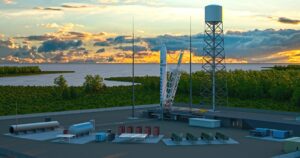
Information that units of the Main Intelligence Directorate twice launched carrier rockets into space from Ukrainian territory during a full-scale war prompts a reassessment of Ukraine’s capabilities in the space sector.
It has been reported that the carrier rocket was launched from a transport aircraft at an altitude of about 8,000 meters, and the recorded technical data indicated altitudes of over 100 and 204 kilometers.
Before the start of the full-scale invasion, Ukraine’s rocket and space industry traditionally revolved around the Pivdenne Design Bureau and Pivdenmash in Dnipro. After 1991, these enterprises maintained their production and engineering capabilities and continued to operate within the framework of international launch programs. The foundation consisted of launch vehicles based on Soviet intercontinental ballistic missiles or developed specifically for space missions.
Air launch
Ukrainian air-launch projects emerged as an attempt to address a fundamental problem—the lack of a domestic spaceport. As early as the late Soviet period, the Pivdenne Design Bureau and the Antonov Design Bureau began developing concepts in which an aircraft would serve as the first stage or launch platform.
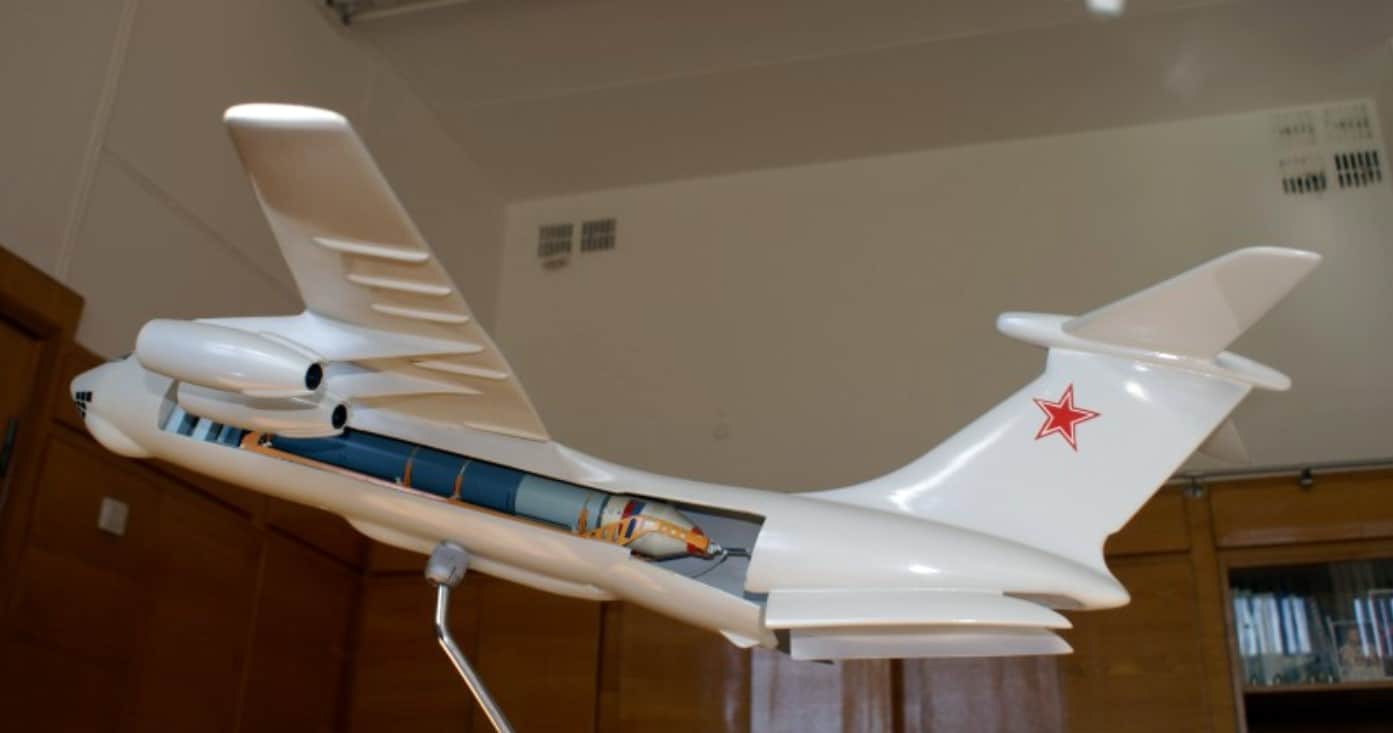
Unlike a traditional spaceport, such a system does not require expensive fixed launch facilities. The aircraft transports the rocket to a designated area, lifts it to an altitude of about 10 km, after which the rocket separates and fires its own engines. This simplifies trajectory selection, reduces azimuth launch restrictions, and allows for launches over neutral waters, which is particularly important for a country without a secure ground launch corridor.
Svitiaz
One of the most ambitious Ukrainian projects was the Svitiaz air-launched space rocket system in the early 2000s. It was developed based on the An-225 Mriya aircraft and a launch vehicle built from components, assemblies, and systems of the Zenit rocket.
According to published specifications, the maximum takeoff weight of the entire system was to be 600 tons, and the maximum launch weight of the rocket was 250 tons. The system was designed to deliver up to 6,600 kg to a low circular orbit at an altitude of 400 km, up to 2,400 kg to a transfer orbit, and up to 700 kg to a geostationary orbit.
However, the Svitiaz was never put into practical use and remained at the conceptual design stage due to a lack of funding.
Oril
In parallel with Svitiaz, the Oril project was considered—a two-stage aerospace system in which the first stage was to be the An-124 Ruslan aircraft, and the second—a payload carrier rocket developed by the Pivdenne Design Bureau.
“Oril” grew directly out of the work on the Space Clipper project, whose preliminary design took place from 1989 to 1991 but was halted with the collapse of the USSR. According to calculations, the rocket was to deliver about one ton of payload to low Earth orbit. However, the project never reached the flight test stage.
UAirLaunch
As early as the late 1980s, studies showed that safely jettisoning a long rocket from such an aircraft was difficult due to aerodynamic vortices at the rear of the fuselage. It was this problem that forced the search for a different rocket deployment scheme.
The UAirLaunch project was conceived to move away from large, complex air-launch systems toward a compact launch complex for small satellites. A modified Il-76T(TD) transport aircraft was chosen as the base carrier, as it has sufficient payload capacity and is readily available on the market, unlike aircraft such as the An-124 or An-225. The project involves modernizing the carrier aircraft by integrating mounting nodes, separation control systems, and onboard systems for interacting with the rocket. This includes modifications to the fuselage’s structural framework, power supply systems, and onboard electronics. Such integration allows for launches without the need to develop a separate specialized aircraft.
For the UAirLaunch system, the Mikron rocket was to be developed with a liquid oxygen-kerosene engine. A key feature was to be the elimination of traditional turbo-pump units in the engine section. Fuel components are supplied via electric pump drives. The power source for these pumps is lithium-polymer batteries located on the rocket stages. This configuration simplifies the engine design, reduces the number of rotating components, and minimizes potential failure points.
The estimated cost of developing the system was approximately $100 million. This amount includes rocket development, aircraft modification, and the creation of basic ground infrastructure. The project was considered a government investment and was proposed for inclusion in the National Space Program.
Orbit Boy
Unlike others, the Orbit Boy project proposes air launch not as a rocket or carrier aircraft project, but as a commercial service. The system involves integrating the payload onto a mobile complex and then transporting it to an airfield. After preparation, the carrier aircraft flies to the designated area and launches the rocket. The stated launch preparation time can be up to 24 hours from the moment the satellite is delivered.
They propose launching the payload into space using a three-stage solid-fuel rocket, along with a cargo aircraft that will drop the rocket from an altitude of 9 km.
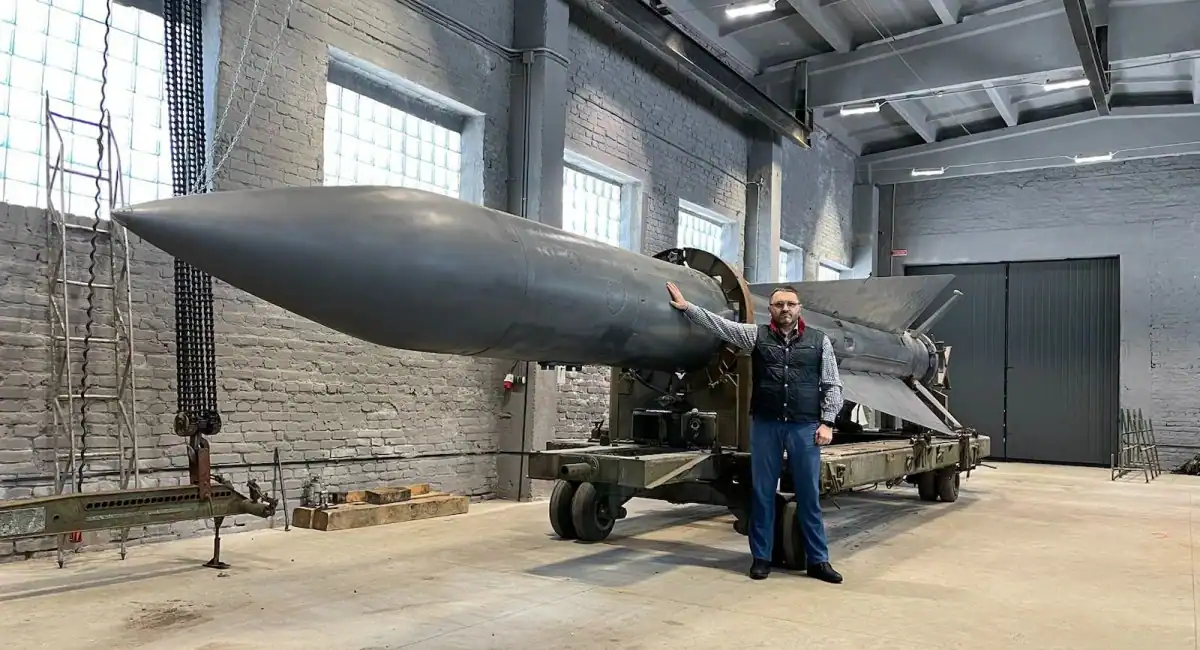
The rocket’s mass is stated at 14.5 tons, with a maximum payload of up to 200 kg, a diameter of 1.4 meters, and a length of 11.6 meters. In 2022, an engineering model manufactured by Pivdenmash was first demonstrated. The prototype was being prepared for drop tests in 2023. At the same time, the company published a photo of the Boy Launcher rocket prototype, which bears a striking resemblance to the 5V21 or 5V28 rocket from the S-200 air defense system. It is worth noting that these missiles use liquid fuel, which may indicate a departure from the original concept of a solid-fuel missile.
Ground launch
The Cyclone missile series
The Cyclone series of missiles was developed from the R-36 intercontinental ballistic missile during the Soviet era. However, they were built entirely from scratch rather than by converting older missiles, unlike the Dnipro missiles, which were created by modifying the RS-20 Satana.
The Cyclone-2 and Cyclone-3 rockets remained in service until 2006 and 2009, respectively. They were subsequently to be replaced by the new Cyclone-4 rocket, a three-stage medium-class launch vehicle.
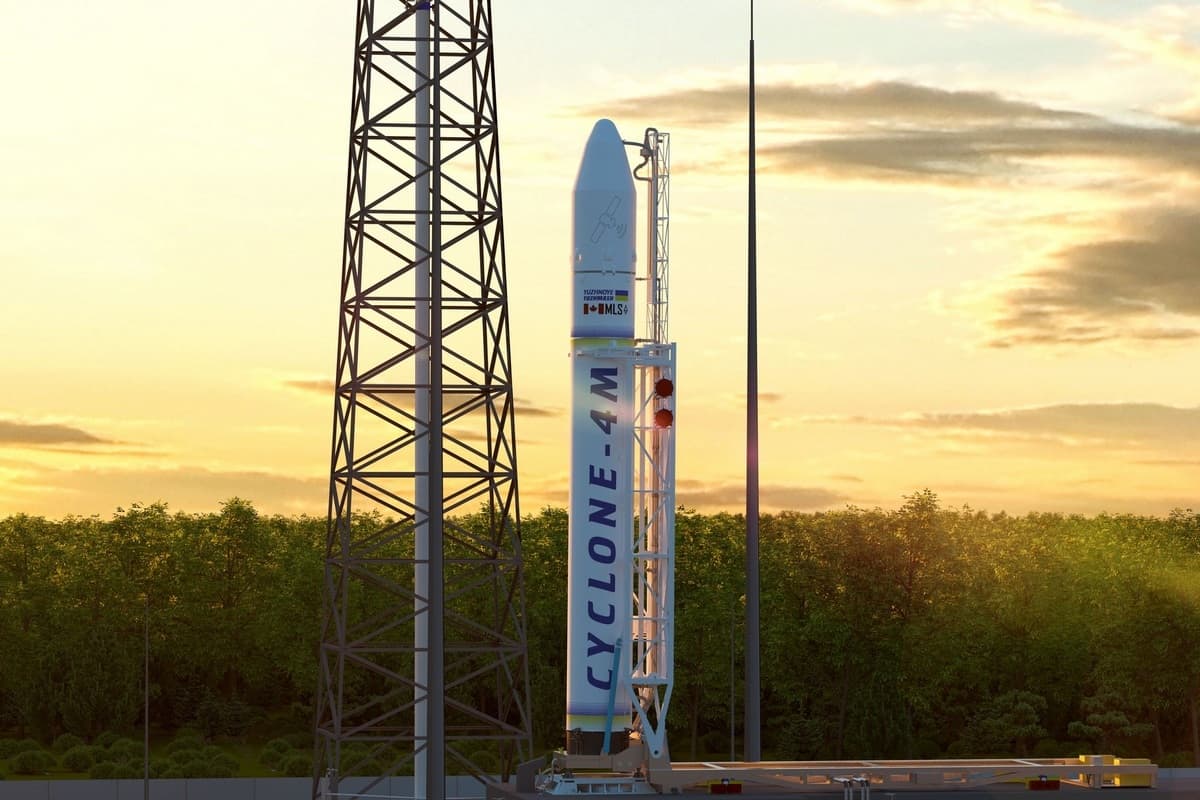
The rocket was intended for launches from the Alcântara Space Center in Brazil. The space center’s geographical location allowed for an increased payload mass due to its proximity to the equator.
Ukraine and Brazil signed an agreement to implement the project in 2003, and in 2004, they established the joint venture “Alcantara Cyclone Space.” The first launch was postponed several times, from 2006 to 2009, 2012, 2013, and 2014. The Ukrainian side completed testing of the RD-861K engine for the third stage in 2010. In 2015, Brazil withdrew from the project, effectively halting the program.
Cyclone-4M
After the Brazilian project was shut down, Pivdenne Design Bureau proposed a new configuration—the Cyclone-4M. This is a two-stage medium-class rocket designed based on previous experience but with a different first-stage propulsion system.
The rocket is 38.7 meters tall and 4 meters in diameter. The first stage uses four RD-870 engines running on a liquid oxygen/kerosene mixture. These engines were developed both as a Ukrainian alternative to Soviet propulsion systems and as a basis for new launch vehicles. The second stage retains the Cyclone-4 design and uses an RD-861K engine.
The rocket is designed to deliver up to 5 tons to low Earth orbit, up to 3.45 tons to a 500-km sun-synchronous orbit, and up to 0.9 tons to a geostationary transfer orbit. This range corresponds to the medium-capacity commercial launch segment, particularly for Earth observation satellites and small-satellite constellations. The integrated upper stage, developed for the Cyclone-4M, underwent fire tests in 2019, confirming the operational readiness of key systems.
From the very beginning, the Cyclone-4M project was oriented toward using the Spaceport Nova Scotia in Canada, which did not yet exist at that time. This allowed the project to avoid dependence on post-Soviet spaceports and integrate into the North American commercial launch market.
Zenit rockets
The Zenit rocket became the primary Ukrainian mid-class design, accounting for the most launches during the period of independence. The Pivdenne Design Bureau developed the rockets, and Pivdenmash produced them.
The first launch of the Zenit-2 took place on April 13, 1985, and ended in failure. The second launch was also unsuccessful. The first successful launch was carried out on October 22, 1985. In total, the rocket performed 37 launches, 30 of which were successful.
Several modifications of the Zenit-3 series were developed based on the Zenit-2. The first of these, the Zenit-3SL, was used in the Sea Launch program. The rocket was equipped with a third stage—the DM-SL booster. Launches were conducted from the Ocean Odyssey floating platform in the Pacific Ocean near the equator.

There was also a Zenit-3SLB version for launches from Baikonur as part of the Land Launch program, equipped with a DM-SLB booster. The Zenit-3SLBF variant uses the Fregat upper stage, which allows for a wider range of orbits.
However, these rockets were heavily dependent on cooperation with Russia, so their production was gradually phased out after 2014. The last launch of a Zenit-series launch vehicle took place on December 26, 2017, at 9:00 p.m. Kyiv time.
Cyclone-1M — a combination of the Zenit and Cyclone rocket designs
Cyclone-1M is a project for a Ukrainian three-stage light-class launch vehicle, developed using technologies from the Cyclone and Zenit rocket lines, and presented in April 2025.
The rocket was designed for the small-satellite segment and for launches into low-Earth and sun-synchronous orbits. It was to be approximately 30 meters tall, with a body diameter of 2.25 meters and a launch mass of 63.8 tons. The stated payload capacity is up to 1,500 kg to low Earth orbit and up to 750 kg to a 600-km-high sun-synchronous orbit.
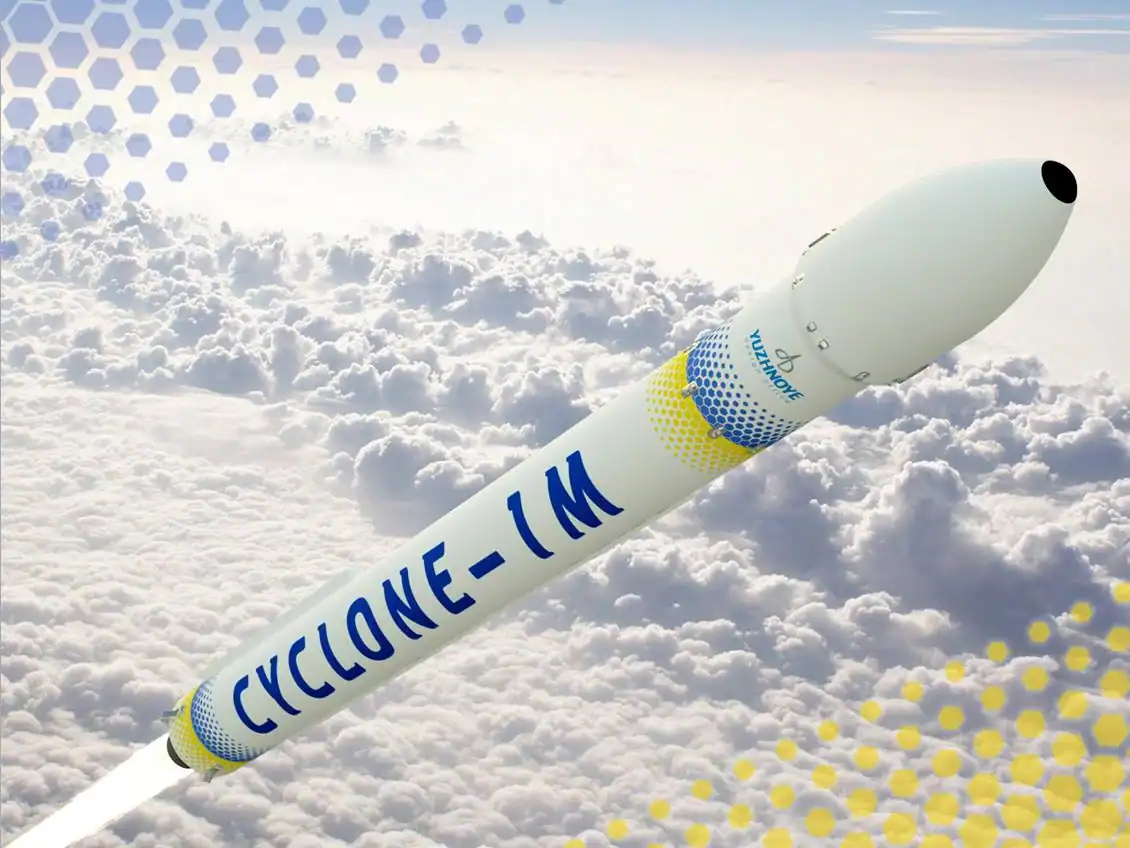
The first stage is powered by a single RD-870 engine burning kerosene and liquid oxygen, with a sea-level thrust of 777.7 kN, based on the Zenit rocket design. The second stage uses the RD-809K engine, developed based on solutions combining the combustion chamber of the RD-861K main engine from the third stage of the Cyclone-4 space launch vehicle and components of the RD-8 steering engine from the second stage of the Zenit launch vehicle.
The third stage can use an RD-840 in an NDMG/AT configuration, capable of multiple firings, or a low-thrust unit based on an aqueous hydroxylamine nitrate solution.
A distinctive feature of this rocket is that, unlike other Ukrainian projects, it was proposed for use from a universal light-class launch facility in southern Ukraine.

According to the plan, the spaceport was to be built on the Black Sea coast at the border of the Odesa and Mykolaiv regions. The choice of this site is linked to the possibility of launches in a southerly direction over the sea.


