

A Ukrainian FPV drone appears to have remotely disabled a Russian Molniya-2 strike UAV, potentially using an onboard electronic warfare system.
Ukrainian activist Serhiy Sternenko shared the incident footage on social media. According to him, drone operators from Ukraine’s Southern Defense Forces forced the Russian drone to crash using a non-contact method.
As the Ukrainian drone approached, the Molniya-2 lost control and crashed, suggesting the possible use of an onboard jamming system that disrupted its communications.
This is not the first recorded instance of such non-contact interceptions. Similar incidents involving Russian Molniya drones — built with inexpensive components commonly found in FPV systems — were first observed in March and became more frequent in April and May, according to Russian military-linked Telegram channels.
One explanation for these losses involves using vulnerable ERLS control systems with active telemetry, which allows interceptors to identify the drone’s signal frequency. Targeted jamming in a narrow frequency band—achievable with low-power systems mounted on drones—can then disable the UAV without physical contact.
This technique allows interceptor drones to be reused without reducing their effectiveness, a significant advantage as Russia increasingly relies on low-cost, expendable drones.

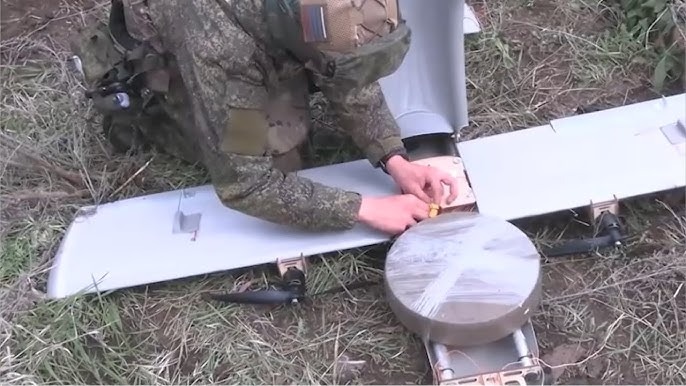
The Molniya-2 is a fixed-wing strike UAV, developed as a successor to the original Molniya. It is assembled from low-cost materials, including foam, plastic, aluminum tubing, and wood, while its electronics and propulsion systems are largely interchangeable with FPV drone components.
With an operational range of up to 60 kilometers and speeds reaching 120 km/h, the Molniya-2 is designed for both mobility and affordability.
Its payload can vary depending on the launch method. It can carry a shaped charge, a small explosive device, or a TM-62 anti-tank mine weighing up to 10 kilograms.
Militarnyi previously reported that Russian forces had started using Molniya drones as aerial carriers for deploying FPV drones.


