A deepening crisis within the Russian armed forces on the Ukrainian front lines suggests a significant erosion of loyalty, discipline, and morale, with numerous reports of unpaid wages, open refusals to fight, and secret surrenders. This internal disarray points to a regime increasingly out of touch with its own military personnel and the wider Russian populace.
A recent video circulating on social media highlighted the plight of a group of Russian soldiers directly from the front, appealing to the Russian people and authorities. Unarmed, their plea was a desperate quest for justice, stating, “Our salaries aren’t being paid. We have children at home and bills to pay.”
This raw footage, devoid of anger and filled only with exhaustion, illustrated soldiers who no longer saw themselves as part of a war effort but as forgotten individuals abandoned by the system.
This failure by the state to fulfil its financial obligations to its soldiers is a significant factor in the army’s internal disintegration, eroding the fundamental trust and mutual responsibility upon which a military stands.
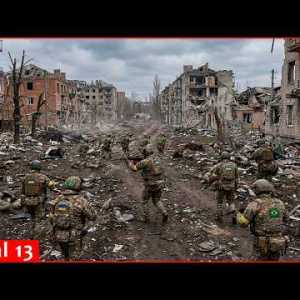
The collapse at the front, however, extends beyond financial hardship. Some units are now overtly questioning and refusing military orders. A striking example occurred on the Zaporizhzhia front, where units of the 1440th Motorized Rifle Regiment reportedly refused to advance due to the presence of a strong and reinforced Ukrainian front line, deeming such an advance suicidal.
In response, Russian military officials are purportedly planning to replace these units with conscripts, despite previous assurances from the military political leadership that conscripted soldiers would not participate in the so called special military operation.
These assurances now ring hollow, as conscripts are frequently used to reinforce combat units and compensate for losses among contract soldiers, leading to widespread dissatisfaction and potential arrest by military police for those who refuse orders.
Dissatisfaction has permeated across the entire battlefield. Russian soldiers fighting in eastern Ukraine, particularly in the Lyman area, are expressing similar grievances. Despite attempts by the Russian armed forces to intensify attacks by transferring additional assault units from the 283rd and 488th Motorized Rifle Regiments, these moves have backfired.
Demoralised soldiers, having lost combat strength from Ukrainian attacks, are rebelling against their leadership, refusing to follow orders, and voicing frustration over the lack of reliable shelters from Ukrainian drones.
The Kremlin administration, however, appears indifferent to this internal disintegration. Yet, the problems are becoming increasingly chaotic, extending beyond ordinary soldiers to include officers.
Russian officers and soldiers are openly voicing discomfort at being part of what they describe as an “illegal war” and are seeking discharge. One officer stated, “I feel like I am part of the illegal war being waged in Ukraine and requested to be discharged.”
This officer’s questioning of their purpose, “Our duty is to protect the Russian people but what are we doing in Ukraine?”, signifies a dangerous ideological fracture for Moscow.
Many younger officers, having grown up in the internet age with access to global news, do not align with the Kremlin’s rigid obedience model. The impact of sanctions on the Russian economy, devaluation of salaries and bonuses, and prolonged deployments further exacerbate their frustration.
By the end of 2022, between 3,000 and 5,000 officers had reportedly applied for early discharge or contract termination. Since the beginning of 2023, an additional 1,500 applications have been made, bringing the total estimated figure to between 6,500.
This represents an average resignation rate of three to four percent among mid level officers. Instances of officer rebellion also include refraining from issuing strict orders, refusing unnecessary attacks, and reporting logistical or personnel shortages through secret reports.
Western intelligence reports indicate dozens of such incidents, which are alleged to have disrupted Russian military offensives. Furthermore, by mid 2023, over 300 non commissioned officers were reported to have been involved in actions such as abandoning units, giving retreat orders, and rebelling against superiors.
Desertions and surrenders further underscore the fracturing within the Russian army. Mediazona, an independent Russian research organisation, reports approximately 7,400 absent without leave (AWOL) cases in military courts since the mobilisation began.
In contrast, Ukraine’s “I Want to Live” United Centre, which processes surrender applications from Russian soldiers, reports receiving 40,057 requests through various channels. This indicates a desperate willingness among Russian soldiers to trust their enemies for survival, making the “I Want to Live” project a source of shame for Russian dictator Vladimir Putin.
Ukraine also reported a severe desertion problem in Russia’s southern military district, with over 18,000 soldiers having left their posts without permission. Around 12,000 of these were from the Eighth Combined Arms Army, deployed in eastern Ukraine, with approximately 10,000 of these deserters being mobilised individuals.
The 58th Combined Arms Army has also seen around 2,500 deserters. The number of soldiers directly surrendering to the Ukrainian army is reported to be over 20,000 since the war began. The total number of those who have deserted, refused to fight, surrendered, or left service without permission is nearly 50,000, representing at least a fivefold increase in surrenders compared to last year.
An analysis of those seeking to desert reveals that 36% are seeking to escape the Russian army entirely, 30% are mobilised individuals, 50% became soldiers after the full scale war began, and 10% signed contracts before the war.
The prolonged deployment without rotation, lack of rotation, and despair contribute significantly to these desertions. Soldiers participating in the “I Want to Live” project strongly criticise their treatment, having realised that the propaganda portraying them as heroes does not align with reality.
Many also suffer from illnesses that should preclude military service, highlighting the disregard for soldiers’ lives and inhumane treatment. Surrender cases among officers are notably fewer.
Rhetoric against Russian dictator Vladimir Putin is also intensifying among soldiers’ families. A video from Siberia shows Kuzbass region Governor Sergey Tsivilev facing angry Russian mothers demanding to know the fate of their sons sent to Ukraine, accusing the Kremlin and officials of lies and callous indifference.
Such scenes are undoubtedly playing out across Russia, with mothers expressing anger at the “big lie” they have been told about the “special military operation.”
Recent polls, though potentially skewed, indicate waning public support for the war. A September 2024 survey by the Chronicles Research Project found that 49% of Russians now support ending the conflict with a mutually beneficial peace agreement, a significant increase from 39% in 2023. Only 29% of Russians support a new military mobilisation, down from 42% in early 2023. This reflects growing exhaustion and scepticism among the Russian populace.
Moreover, foreign mercenaries, including those from North Korea and the Czech Republic, are reportedly sharing the same disillusionment as Russian soldiers. An unnamed Czech man who volunteered for the Russian army is now reportedly begging to be rescued, a situation Czech Foreign Minister Jan Lipavský described as a cautionary tale.
While Czech law prohibits joining a foreign army without permission, the Czech government is largely powerless to assist those who voluntarily enlist with Russia.
The war, which Russian dictator Vladimir Putin continues to call a special military operation, is losing its “special” and “military” order.
The enemy is no longer just Ukraine but the truth itself, as hundreds of thousands of soldiers, officers, mothers, and the Russian people themselves question the rationale behind the conflict, the lack of payment, and the disregard for lives.