
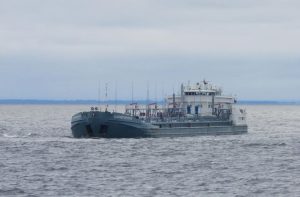
Ukrainian drone attacks on the ports of Ust-Luga and Primorsk in late March temporarily disrupted Russian oil shipments, but tanker traffic has already returned to pre-strike levels.
Commodore Merila Ingham of the Royal Navy and commander of NATO’s Standing Naval Group 1 shared this in a comment to Yle.
According to her, several ships carrying oil cargoes are currently operating daily in the Gulf of Finland. Near the ports, up to several dozen ships may be anchored at the same time, awaiting loading.
According to the Chief of Staff of the Finnish Navy, Commodore Marko Laaksonen, the greatest concern is that new ships are constantly entering the Baltic Sea, whose crews are unfamiliar with local conditions. NATO and the Finnish Navy assess the risk of a maritime accident as still high.

The commander of NATO’s Standing Naval Group 1 also reported that Alliance countries have significantly accelerated their response to incidents in the Baltic Sea. This has been made possible by enhanced cooperation among Baltic Sea region countries, intelligence, and the use of modern technologies.
“Over the past 18 months, response time has been reduced from 17 hours to just one hour,” she stated.
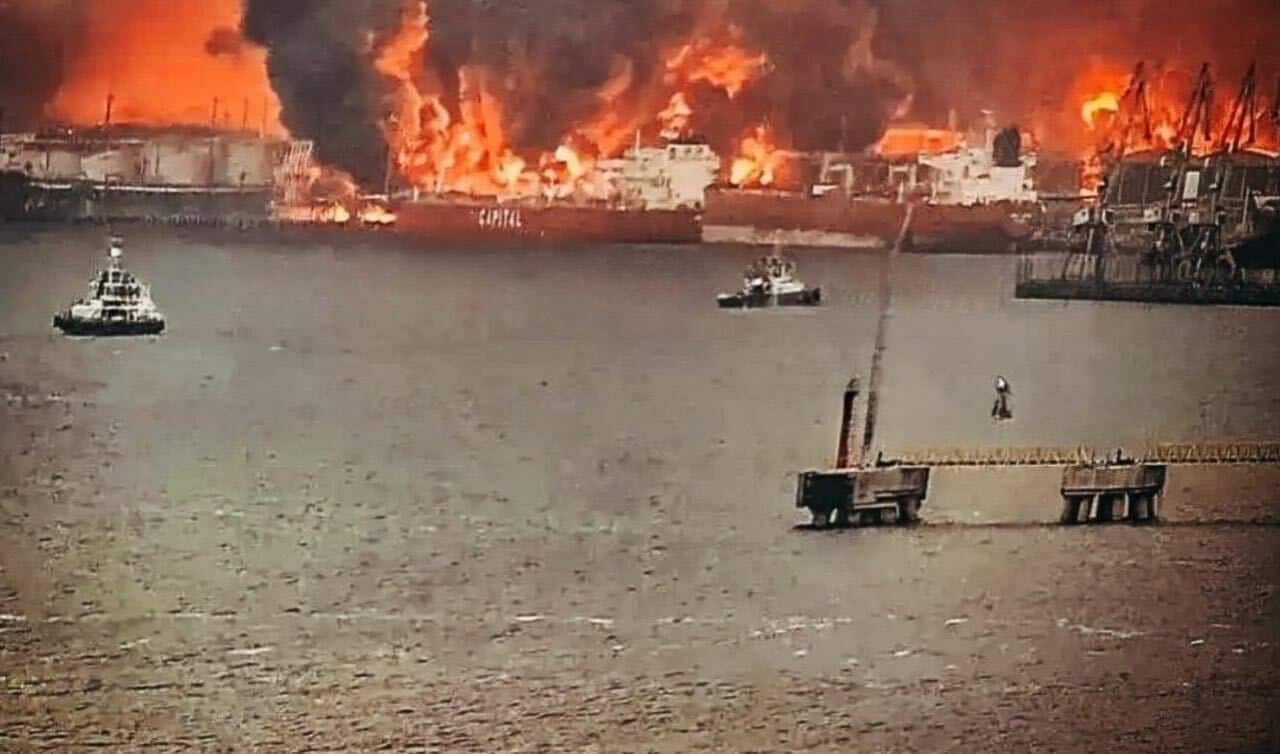
As a reminder, on the night of March 25, Ukrainian drones struck the Russian oil port of Ust-Luga — the second-largest and most modern seaport on the Baltic Sea and one of the largest in Europe. Follow-up attacks took place on March 31 and April 7.
In addition, large-scale fires broke out following strikes on the oil depot at the berths of the “Transneft-Port Primorsk” facility in Russia’s largest oil port, Primorsk, on March 23. A follow-up attack took place on April 5.
According to Vladislav Vlasyuk, the President’s Representative on Sanctions Policy, Ukrainian strikes against the Russian oil and gas industry prevented Russia from earning additional revenue from rising oil prices caused by the war between the US, Israel, and Iran.


