
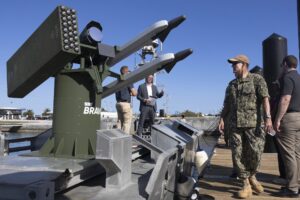
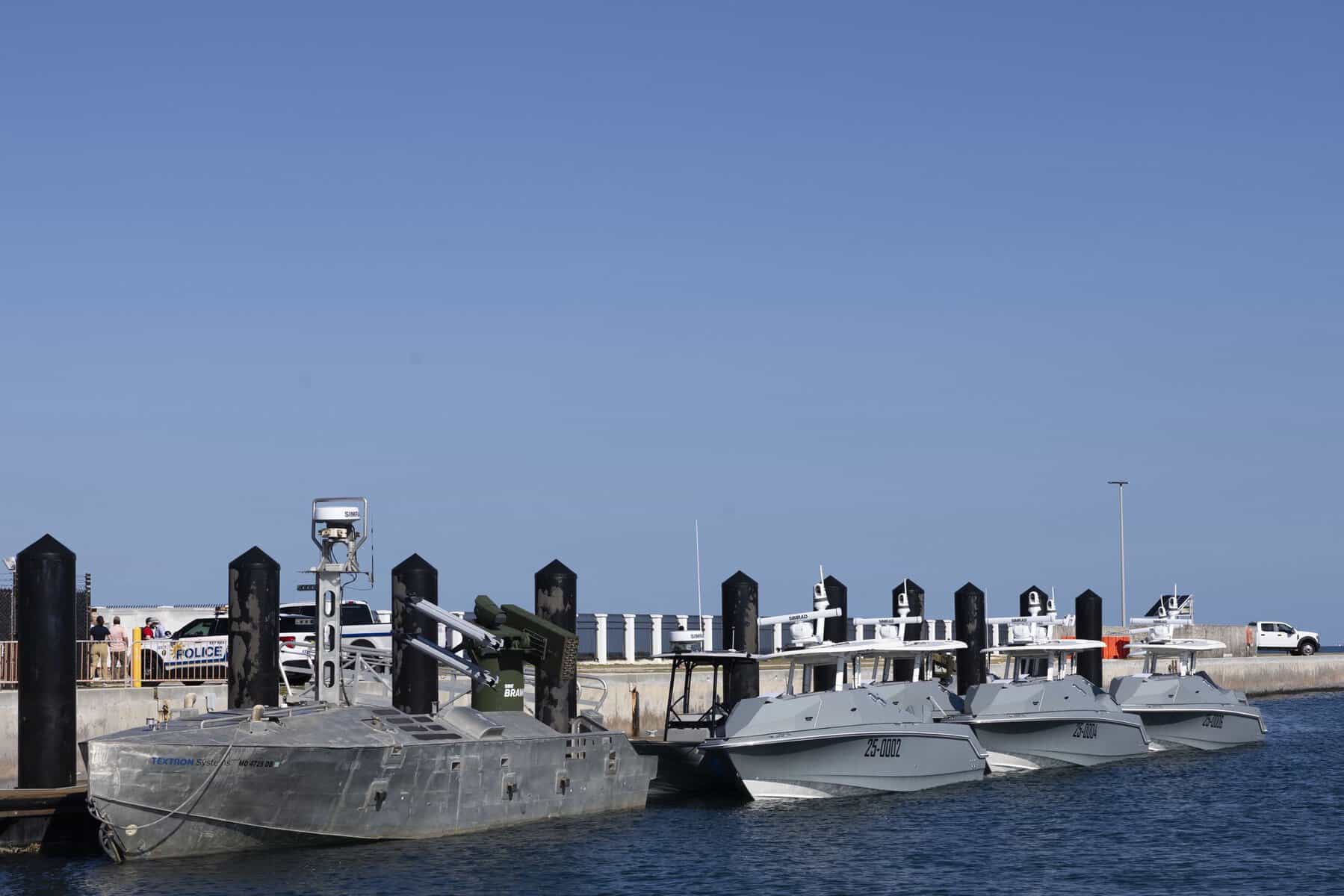
U.S. company Textron has equipped the Common Unmanned Surface Vehicle (CUSV) naval drone with the BRAWLR universal combat module, which can employ various anti-aircraft missiles.
The official accounts of U.S. Naval Forces Southern Command and the U.S. 4th Fleet published the photos on X.
The surface drone equipped with the air defense system was presented during a visit by senior U.S. military officials to the annual Fleet Experimentation (FLEX) 2026 event, where new technological developments are showcased.
According to the organizers, FLEX is a cornerstone of U.S. Naval Forces Southern Command’s strategy to deploy advanced robotic and autonomous systems to patrol large maritime areas with a limited number of traditional naval assets.
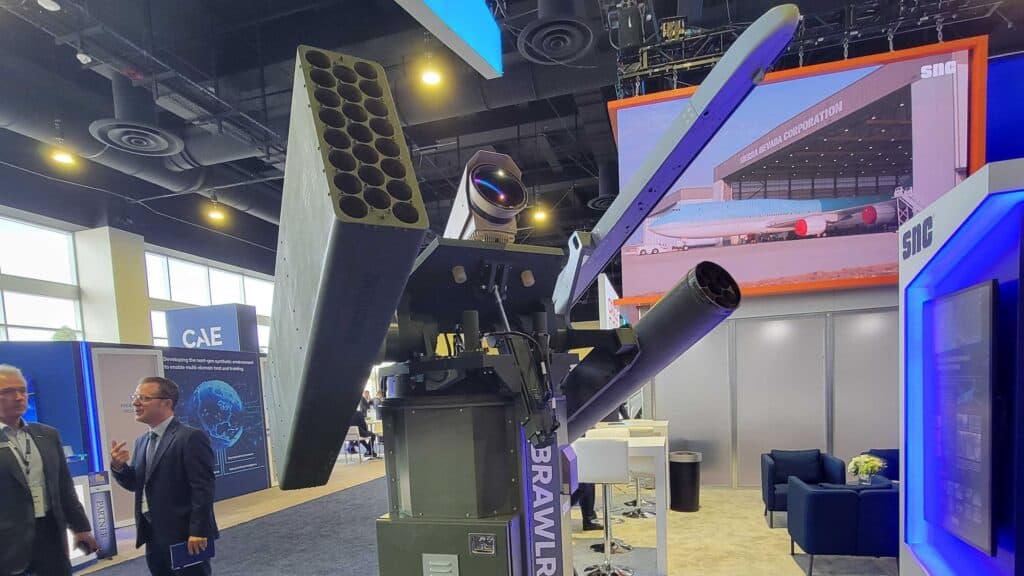
BRAWLR air defense system
Sierra Nevada’s BRAWLR universal air defense system was first publicly introduced in September 2025.
BRAWLR can simultaneously carry up to four types of missiles to intercept kamikaze drones and cruise missiles. It can be equipped with APKWS, AIM-120, IRIS-T, and AIM-9 missiles.
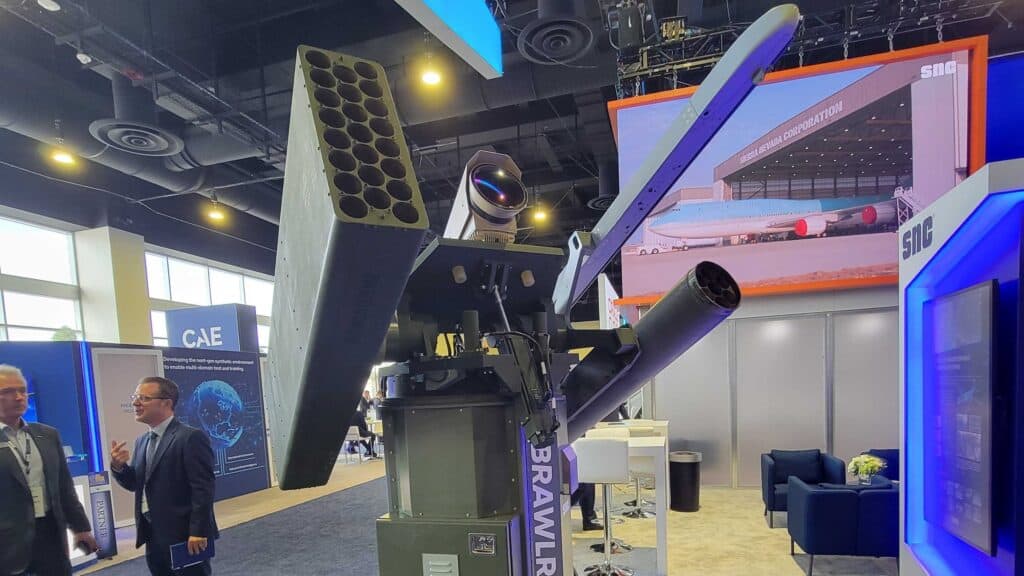
For targeting, the system is equipped with a FLIR thermal imaging camera, MANET connectivity, and can use LAU-7 aviation pylons and LAU-68 and LAU-131 launch containers as launch guides.
According to the company, since its deployment in 2023 and as of the time of the presentation, the system has intercepted more than 400 air threats. The company did not specify where BRAWLR was deployed, but given the number of intercepted targets, Ukraine is a likely operator.
Common Unmanned Surface Vehicle naval drone
The U.S. Navy has long used CUSV family drones. Textron received its first $33.8 million contract in October 2014 to supply CUSVs for the Unmanned Influence Sweep System (UISS) program. The contract included design, development, and qualification of the UISS, as well as joint command-and-control software, within a 30-month engineering, production, research, and development phase.
In the basic configuration, the CUSV has a length of about 11.7 m and a width of 3.5 m. The gross weight is about 11,340 kg. The maximum speed exceeds 30 knots. Endurance can reach 72 hours, and the range at a speed of 10 knots exceeds 926 km.
The total payload capacity is about 2,250 kg, the deck payload area is about 12.1 m², and the allowable mass of surveillance equipment is 45 kg. Full operation is possible at wave heights of 1.25 m, and limited operation at wave heights of up to 2.5 m.
The system can be used for mine countermeasures, search and neutralization of threats, as well as for surface combat, expeditionary operations, and deployment of ISR sets — intelligence, surveillance, and reconnaissance.


