
Russia has patented a peculiar and questionable new defence system for its ageing UAZ-452 “Bukhanka” vans in a fresh attempt to shield its forces from Ukraine’s relentless fleet of first person view (FPV) drones. The system, which resembles something from a bad science fiction film, involves attaching large, spinning propeller blades to the exterior of the vehicle in hopes of knocking drones out of the sky.
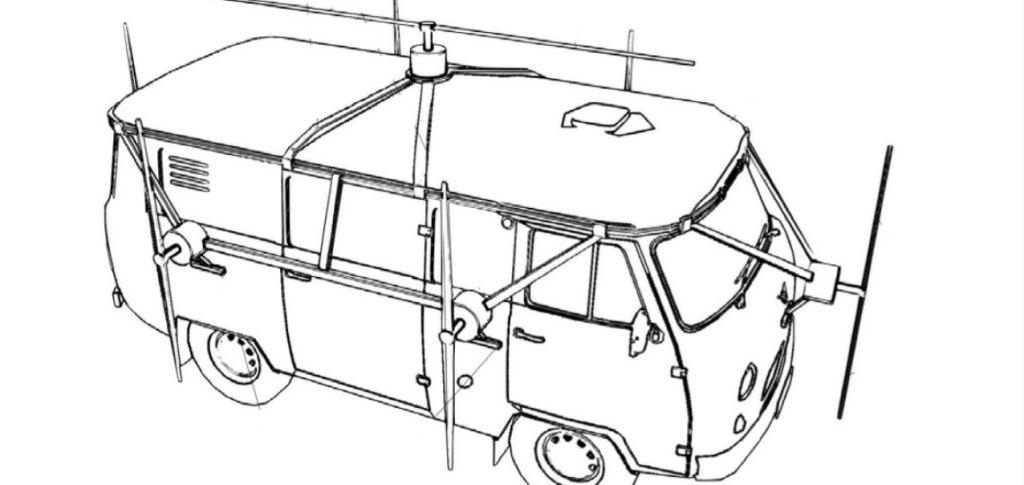
According to documents and images shared by Russian military observers, the so-called anti-drone system involves several electric motors with metre-long blades mounted on a metal frame bolted to the Bukhanka’s roof or sides. These motors connect to the van’s onboard power supply and spin at speeds of up to 600 revolutions per minute. In theory, the spinning blades are supposed to either destroy the incoming drone or deflect its shaped charge warhead before it detonates effectively.
The system’s inventor admits that communication interference makes it difficult for Ukrainian drone operators to see the spinning blades clearly on their screens, implying this visual trickery might confuse FPV drone pilots. The design even includes a deliberate gap between the van’s body and the rotating blades, which is supposed to weaken the explosive jet if the warhead hits the blade first.
But despite the strange mechanical efforts, experts and Ukrainian drone operators remain sceptical. Drones armed with explosive warheads or equipped to drop mines from above are unlikely to be thwarted by such rudimentary defences. Ukraine’s FPV drone pilots have already demonstrated precision strikes that outmanoeuvre and overcome far more advanced Russian defences. Moreover, any drone armed with a rocket or mine-laying payload can strike from angles and distances where these blades are useless.
While Russian state media touts the patent as a novel success, the battlefield tells a different story. In a recent engagement in the Kupiansk direction, one such “blade-protected” Bukhanka was swiftly destroyed by the Ukrainian Achilles UAV battalion of the 92nd Assault Brigade, its spinning propellers proving utterly ineffective against modern FPV tactics.


