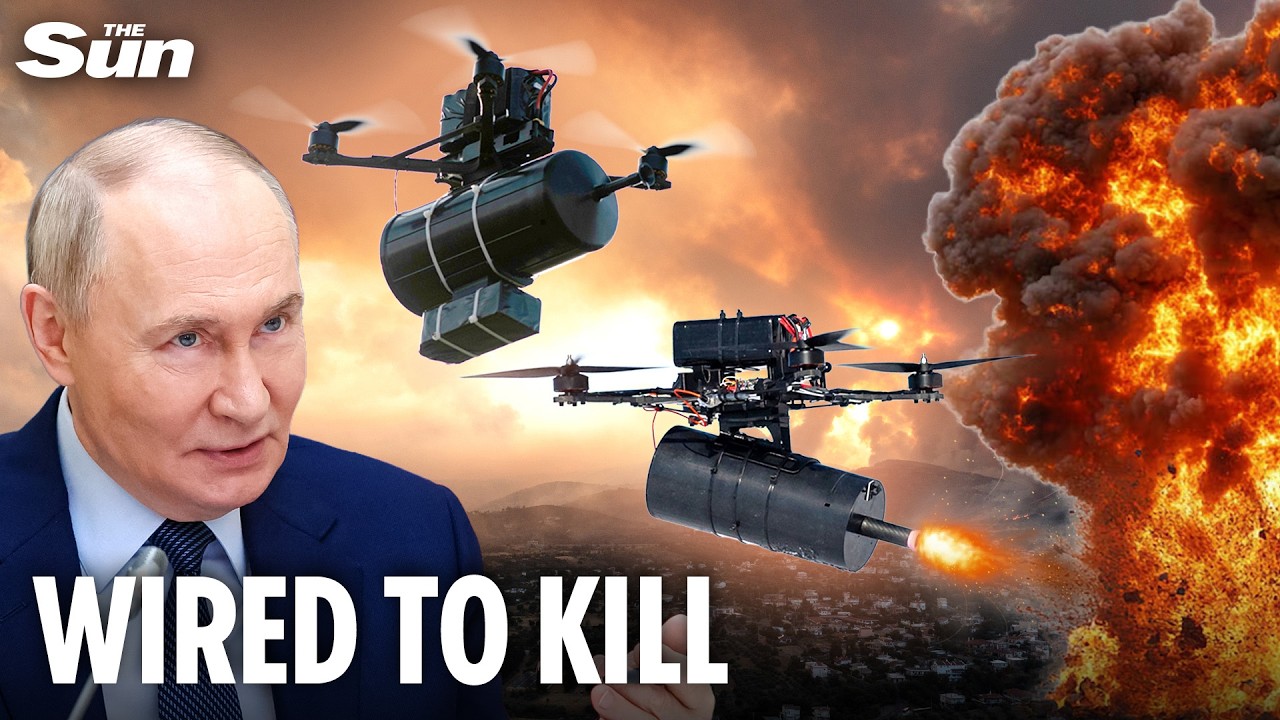
(Kyiv) – Ukraine has quietly unveiled a technological breakthrough in its fight against Russian occupation forces – a new class of battlefield drone controlled by fibre optic cables. The development, described by defence experts as a game changer, is altering the way modern warfare is fought and leaving the Russian dictator’s military scrambling to adapt.
These fibre optic drones are not controlled through the usual electromagnetic spectrum, which is highly vulnerable to jamming and cyber interference. Instead, the drones are tethered to their operators by long, thin fibre optic cables, rendering them immune to traditional Russian electronic warfare tactics. For now, the only way to disable them is to physically sever the cable – something that is far easier said than done on the battlefield.
Former British intelligence officer Hamish de Bretton-Gordon has said this Ukrainian innovation turns modern drone warfare on its head. He likened it to flying a high-tech kite, noting that while it may seem like a step back in design, it is in fact a significant leap forward in combat resilience. These drones can manoeuvre deep into trenches and bunkers without being detected or jammed.
The change has come after both Ukraine and Russia pushed the limits of electronic warfare over the last three years. With each side jamming and cyber-attacking the other’s drones, Ukraine’s adaptation to fibre control marks a strategic leap that Russia has so far been unable to counter.
British defence analysts believe that the widespread use of these drones could sharply reduce the effectiveness of Russia’s electronic jamming capabilities, potentially exposing Kremlin forces to previously unreachable strikes. The cost of the fibre-controlled drones is relatively low, while the value of the Russian tanks, artillery, and vehicles they are destroying runs into the millions. One British-made tank costs upwards of £5 million GBP (around 610 million Russian roubles), yet a small fibre drone can destroy it with a simple grenade dropped through a hatch.
Although the use of these drones limits flight endurance due to the extra weight of the cable, Ukrainian forces are relying more on surgical strikes than long range reconnaissance. In that role, these drones are highly effective and increasingly common along the frontlines.
The British government has also acknowledged the changing nature of war. Just days ago, the UK Defence Secretary announced the creation of a new Cyber and Electromagnetic Command as part of the Strategic Defence Review. The command will focus on controlling the electromagnetic spectrum – precisely the space Ukraine’s new fibre drones bypass entirely.
Military analysts have warned that both sides are now preparing for a potential return to old fashioned, boots on the ground soldiering. If jamming and cyber warfare cancel each other out, future battles could look less like science fiction and more like twentieth century combat. But for now, Ukraine’s fibre drones are creating a terrifying new problem for Russian occupiers: they cannot jam what is no longer online.


